



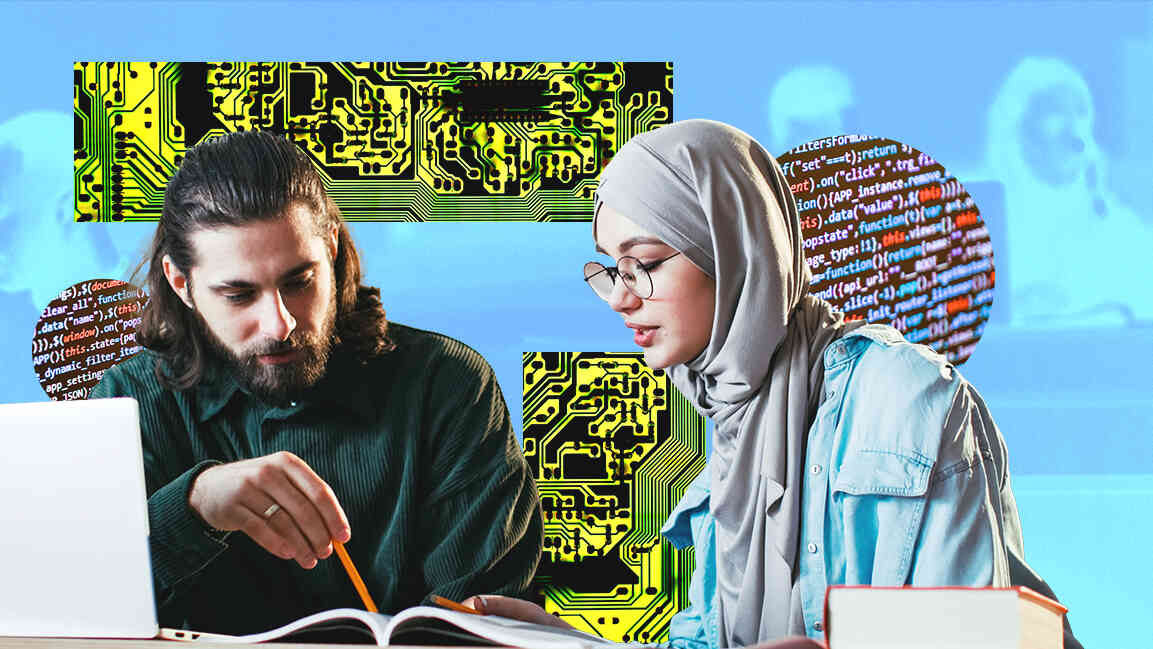
A new study by Coursera has revealed that Artificial Intelligence is rapidly becoming integral to higher education in Saudi Arabia, with students and educators reporting significant improvements in learning outcomes, efficiency, and academic performance. The nationwide survey, conducted with international market research firm Censuswide, underscores the urgent need for universities to evolve their frameworks to keep pace with rapid technological adoption.
Widespread Adoption Yields Academic Gains
The research highlights a profound and positive reception to AI within the Kingdom’s universities. A striking 91% of respondents view AI’s impact on higher education positively, while an overwhelming 86% of students reported that their grades have improved since incorporating AI tools into their studies.
Students are integrating AI across their entire academic journey. Nearly half leverage it for critical tasks such as exam revision, generating practice tests, and conducting research. Similarly, many rely on AI for writing assignments and planning their schedules. Beyond academics, 38% of students also use AI as a time management tool, showcasing its expanding role in overall productivity.
Educators Embrace AI for Efficiency
The benefits of AI adoption are not limited to students. The study found that 36% of educators use AI to reduce time spent on administrative work and lesson planning, freeing them up for more direct, one-on-one student interaction. Faculty members also pointed to significant productivity gains, reduced grading errors, and the ability to provide faster feedback as key advantages of integrating AI into their workflows.
Overall, 41% of all survey respondents described AI’s impact as “very positive,” citing benefits like more personalized learning experiences and stronger assessment standards.
Governance and Integrity Concerns Emerge
Despite the clear momentum, the rapid adoption has raised significant concerns about governance and academic integrity. Over three-quarters of respondents believe that current higher education frameworks must evolve to properly accommodate AI, particularly concerning data privacy, the preservation of academic integrity, and the long-term value of university degrees. While AI is seen as a powerful tool for exam preparation, many also worry about the potential for plagiarism, algorithmic bias in grading, and the erosion of essential human skills.
“AI is already part of how students learn and how educators teach across Saudi Arabia’s higher education system, and the data shows significant gains in learning outcomes and efficiency,” said Kais Zribi, Coursera’s General Manager for the Middle East and Africa. “What this research makes clear is that adoption is moving faster than the frameworks needed to support it.”
About Coursera
Coursera partners with more than 300 leading university and industry partners to offer a broad catalog of content and credentials, including courses, Specializations, Professional Certificates, Guided Projects, and bachelor’s and master’s degrees. The platform is used by millions of learners worldwide to access flexible, affordable, and job-relevant online learning.
Source: Fast Company Middle East