



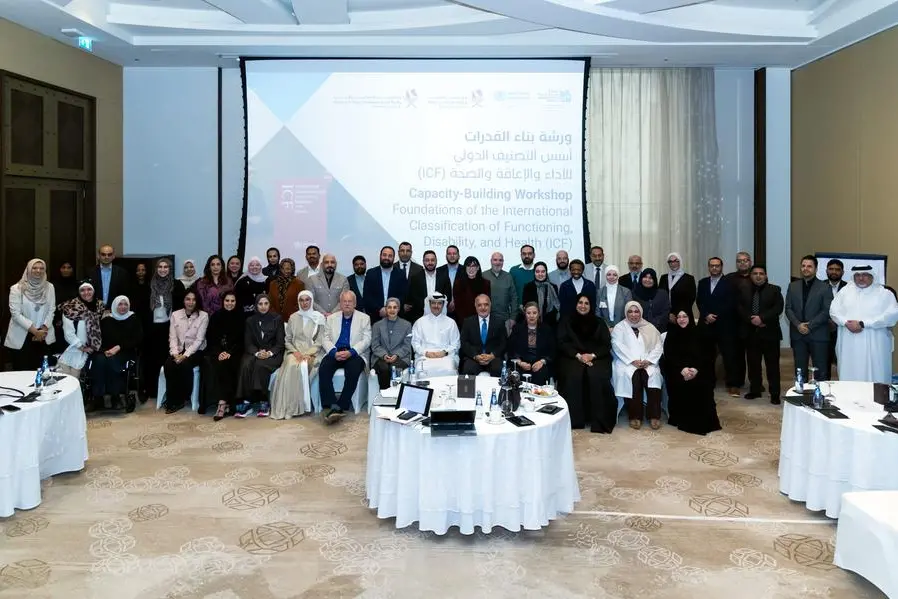
In a significant move to bolster Qatar’s social development ecosystem, Hamad Bin Khalifa University (HBKU) has partnered with the Ministry of Social Development and Family (MSDF), the Ministry of Public Health (MOPH), and the World Health Organization (WHO) to host a pivotal capacity-building workshop. The initiative focuses on implementing the WHO’s International Classification of Functioning, Disability and Health (ICF) to enhance how disability and health are understood, measured, and addressed across the nation.
A Unified National System
The workshop is a cornerstone of Qatar’s broader disability reform, directly supporting the National Disability Classification Project led by the MSDF. The project’s primary goal is to establish a unified, fair, and transparent national system for disability assessment and service eligibility, adapting the function-focused, rights-based ICF framework to Qatar’s unique legal and policy landscape.
Ms. Maha Al-Mansouri, Chief Executive Officer of Mada Center and national lead of these projects, highlighted the objective in her opening remarks. “The objective of this reform is clear: to move toward a single, coherent national system that ensures fairness, consistency, and transparency across all sectors serving persons with disabilities.”
Cross-Sector Collaboration is Key
The success of the reform hinges on strong inter-sectoral coordination. Sheikh Dr. Mohamed Bin Hamad Al-Thani, Director of the Non-Communicable Diseases Prevention Program at the Ministry of Public Health, affirmed the importance of this collaborative approach, particularly in addressing complex conditions like autism. He noted that a multifaceted approach is necessary, highlighting “the need for collaboration between different ministries and all stakeholders involved in autism care.”
Dr. Rayana Bou Haka, WHO Representative to the State of Qatar, echoed this sentiment, stating that the determinants and policy domains related to disability are interconnected and that “success will depend on joint action and coordinated responsibilities.”
Bridging Policy and Practice
Led by experts from the WHO Eastern Mediterranean Regional Office and the Swiss Paraplegic Research unit, the workshop brought together policymakers and practitioners for expert instruction and applied, case-based exercises. This training initiative builds on the recently issued Law No. 22 of 2025 regarding Persons with Disabilities in Qatar, which reinforces the state’s commitment to social inclusion.
The event underscores HBKU’s strategic role in translating global, evidence-based frameworks into national development priorities, moving beyond traditional medical models toward a holistic, person-centered approach.
Dr. Hira Amin, Assistant Professor at HBKU’s College of Public Policy, commented on the university’s contribution.
“By promoting inclusivity across policy, planning, and institutional frameworks, the university embodies the role of academia in fostering collaborative environments where persons with disabilities can fully exercise their social and economic rights.”
About Hamad Bin Khalifa University
Hamad Bin Khalifa University (HBKU), a member of Qatar Foundation for Education, Science, and Community Development (QF), is a leading, innovation-centric university committed to advancing education and research to address critical challenges facing Qatar and beyond. HBKU develops multidisciplinary academic programs and national research capabilities that drive collaboration with leading global institutions. The university is dedicated to equipping future leaders with an entrepreneurial mindset and advancing innovative solutions that create a positive global impact.
Source: Zawya