





Meta, the parent company of Facebook, Instagram, and WhatsApp, has officially announced the launch of Meta Compute, a major new initiative aimed at massively scaling its internal AI infrastructure. The move, announced by CEO Mark Zuckerberg, signals the tech giant’s
intention to build a core strategic advantage in the global AI race by controlling its own computational power.
This development follows earlier financial projections where Meta signaled significant capital expenditure to build out its AI capabilities, a promise the company is now moving to fulfill aggressively.
A Gigawatt-Scale Vision for AI Dominance
In a post on Threads, Mark Zuckerberg outlined the sheer scale of the company’s ambition, revealing plans to drastically expand its energy footprint to power its AI models and products.
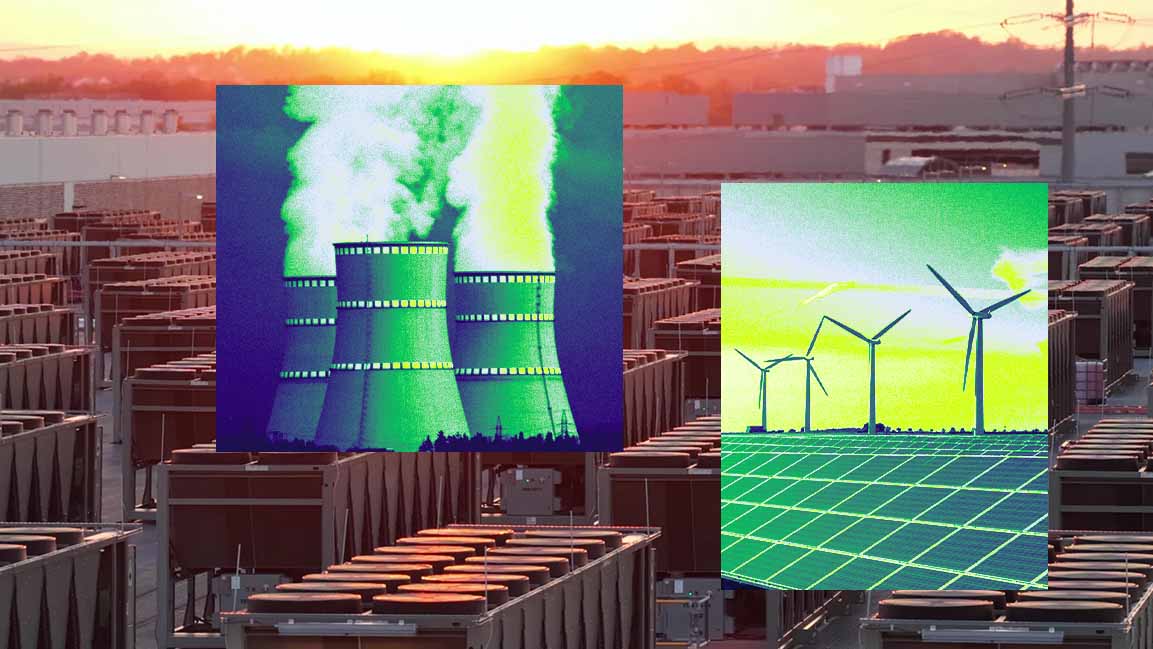
“Meta is planning to build tens of gigawatts this decade, and hundreds of gigawatts or more over time. How we engineer, invest, and partner to build this infrastructure will become a strategic advantage,” Zuckerberg stated.
To put this in perspective, a single gigawatt is equivalent to one billion watts. The immense energy requirements for training and running advanced AI models are positioning computational infrastructure as a critical battleground for tech supremacy.
The Executive Trio Leading the Charge
Zuckerberg has appointed a team of three seasoned executives to spearhead the Meta Compute initiative.
Santosh Janardhan, Meta’s Head of Global Infrastructure and a veteran at the company since 2009, will oversee the technical architecture, software stack, silicon program, and the global operation of data centers and networks.
Daniel Gross, co-founder of Safe Superintelligence who joined Meta last year, will lead a new group focused on long-term capacity strategy, supplier partnerships, industry analysis, and business modeling.
Rounding out the leadership team is Dina Powell McCormick, a former government official who recently joined as President and Vice Chairman. She will be responsible for navigating government relations to “build, deploy, invest in, and finance Meta’s infrastructure” globally.
Implications for the MENA Tech Ecosystem
While Meta Compute is a global initiative, its ripple effects will be felt across the MENA region’s burgeoning tech scene. As global giants build proprietary, large-scale infrastructure, regional AI players and sovereign cloud initiatives in countries like the UAE and Saudi Arabia face heightened competition for talent and resources.
This move could also present opportunities. Dina Powell McCormick’s role in government relations may open doors for future partnerships or data center investments in the MENA region, which is increasingly recognized for its strategic location and growing commitment to digital transformation. For MENA startups, Meta’s advancements could eventually lead to more powerful tools and platforms, but it also raises the bar for local innovation in the AI space.
The Broader AI Infrastructure Arms Race
Meta’s announcement is the latest move in an escalating “arms race” among tech behemoths to build generative AI-ready cloud environments. Microsoft has been actively forging partnerships with AI infrastructure providers, while Google’s parent company, Alphabet, recently acquired data center firm Intersect. These massive capital-intensive projects underscore that access to and control over computational power is becoming the key differentiator in the AI era.
About Meta Compute
Meta Compute is a new internal initiative by Meta designed to significantly build out the company’s proprietary AI infrastructure. Its primary goal is to create a strategic advantage by developing and operating a vast network of data centers and computational resources required to train and deploy next-generation AI models and product experiences.
Source: TechCrunch