


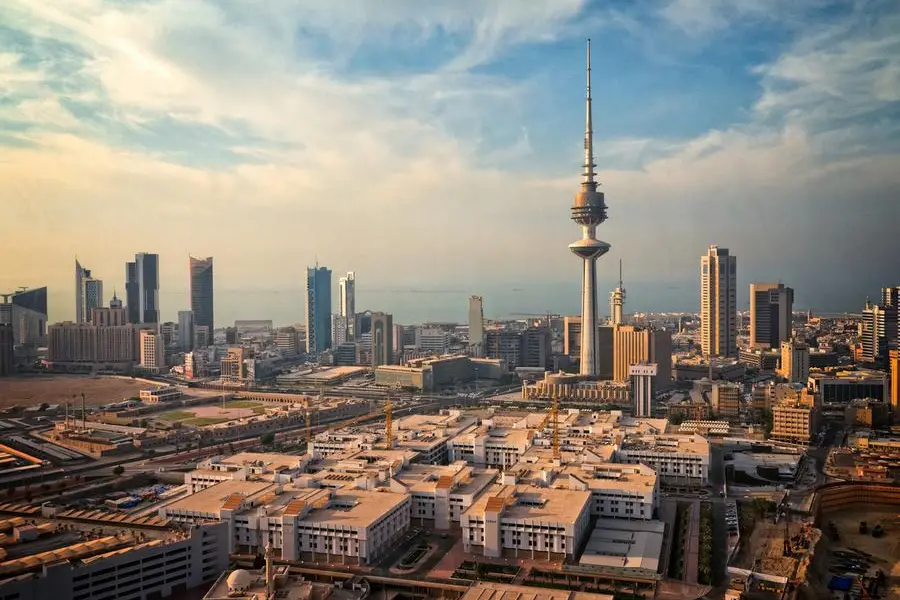
Kuwait’s comprehensive financial reform programs and a clear economic roadmap are garnering significant international validation, boosting investor confidence and enhancing the nation’s standing on the global stage. Recent positive assessments from leading institutions, including the International Monetary Fund (IMF), the World Bank, and credit rating agencies, signal a pivotal shift in the perception of Kuwait’s economy, driven by a commitment to sustainable growth and fiscal discipline under the Kuwait Vision 2035 framework.
A Chorus of International Approval
The positive outlook from global bodies reflects a tangible improvement in Kuwait’s economic performance. According to Abdullah Al-Turkait, Chairman of the Board of the Union of Investment Companies, these assessments confirm the country is on a path of gradual recovery and more balanced growth, showcasing the soundness of its economic policies.
The IMF projects Kuwait’s economy will return to a growth trajectory in 2025, recording a real growth of 2.6%, with continued improvement driven by non-oil sectors. The World Bank echoes this sentiment, forecasting sustained growth of around 2.2% in 2025 and 2.7% in 2026. Furthermore, the IMF anticipates inflation will decline to 2.3% in 2025, down from an estimated 2.9% in 2024.
Upgraded Ratings and Increased FDI
This improved economic climate has translated directly into stronger credit ratings. Standard & Poor’s raised Kuwait’s sovereign rating to “AA-” with a stable outlook, citing progress in financial reforms and legislation supporting financial sustainability. Al-Turkait noted that this improvement directly reduces the cost of financing for both sovereign and corporate entities and enhances Kuwait’s ability to attract foreign direct investment (FDI).
The reforms are already showing results, with FDI inflows into Kuwait increasing by eight percent year-on-year, reaching approximately $725 million during the 2024-25 fiscal year. This influx of foreign capital spans various sectors, underscoring growing international confidence in the local investment climate.
The Pillars of a Resilient Economy
Mohammad Al-Jouan, Secretary-General of the Kuwaiti Economic Society, outlined six key pillars contributing to the improved international outlook. These include enhanced fiscal discipline, a robust banking sector under the Central Bank of Kuwait’s advanced supervision, and gradual progress in institutional reforms and transparency.
He also highlighted the stability of Kuwait’s monetary policy, the strategic passage of the public debt law, and intensified government efforts to combat corruption as critical factors. “These combined developments have helped reshape the international view of Kuwait’s economy,” Al-Jouan explained. “Not only as an asset-rich economy but as one that is gradually moving toward more efficient and sustainable resource management.”
Transitioning From Stability to Sustainable Growth
Experts agree that Kuwait’s economy is transitioning from a phase of “managing stability” to one of “managing growth.” This shift requires creating sustainable growth drivers by empowering the private sector, stimulating high-quality investment, and developing the nation’s labor market.
Dr. Osama Al-Falah, Professor of Economics at Gulf University for Science and Technology, emphasized the credibility of the international reports. “Kuwait, thanks to its financial stability and strong institutions, has become more qualified than ever to attract high-quality investments,” he stated. “The positive shift in international institutions’ view of Kuwait’s economy enhances optimism for a sustainable future based on diversification, innovation and good governance.”
About Kuwait Vision 2035
Kuwait Vision 2035 is a national development plan aimed at transforming Kuwait into a leading financial, commercial, and cultural hub in the region. The vision is built on several key pillars, including developing a sustainable and diversified economy, investing in human capital, improving infrastructure, and promoting good governance to ensure a prosperous future for its citizens.
Source: Zawya