



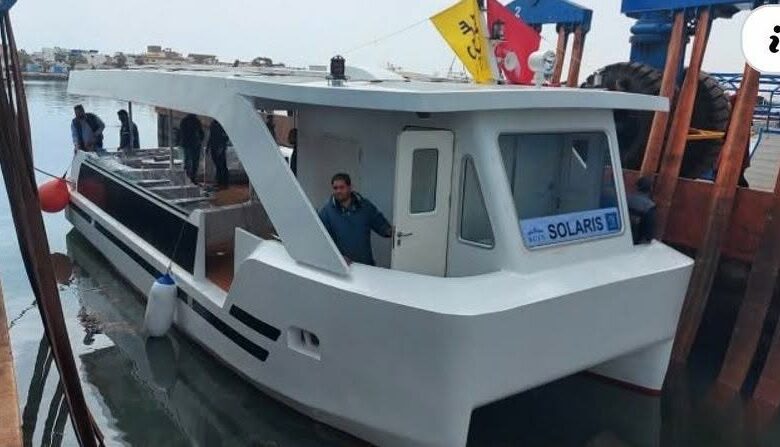
Tunisia has officially launched the Mediterranean’s first artisanal fishing boat powered entirely by solar-generated electricity. The vessel’s inaugural journey took place off the island of Djerba, marking a significant milestone in a broader initiative led by WWF North Africa to decarbonize the region’s traditional fishing sector.
Quick Facts
- First solar-electric fishing boat in the Mediterranean.
- Project aims to decarbonize artisanal fishing.
- Funded by the UK government.
A Push Towards a Greener Blue Economy
The launch is a key part of the “Decarbonizing the Artisanal Fishing Sector in Tunisia: Promoting Clean Energy for Sustainable Coastal Communities” project. Financed by the UK’s Foreign, Commonwealth and Development Office, the initiative aims to drive the adoption of renewable energy in traditional fishing to cut down on pollutant emissions and operational costs for fishermen.
By replacing fossil fuel-powered engines with a clean energy alternative, the project is expected to significantly lower fuel expenses, reduce carbon dioxide emissions, and decrease both marine and noise pollution.
The Tech Behind the Transition
The pilot model operates using an electric motor designed for coastal fishing boats, powered by a rechargeable battery. To support this new fleet, dedicated solar charging stations have been installed for fishing development complexes in Ghannouch (Gabes governorate) and Ajim (Medenine governorate).
Project organizers stated this is the “first concrete demonstration in Tunisia of the viability of solar-electric power as an alternative to traditional fossil fuel engines,” positioning the country as a pioneer in this field within the Mediterranean.
Setting a Regional Benchmark
The year-long project, focused on the Gulf of Gabes, will see a total of eight artisanal fishing boats equipped with solar-electric propulsion systems. Beyond the hardware, the program includes training for over 100 fishermen and relevant institutional representatives.
The insights and data gathered will inform studies and policy recommendations to support Tunisia’s national energy transition strategy within its maritime sector. Stakeholders hope this model can be replicated across other Tunisian coastal areas and eventually adopted by other Mediterranean countries to advance a sustainable blue economy.
About the Decarbonization Project
The “Decarbonizing the Artisanal Fishing Sector in Tunisia” project is a WWF North Africa initiative funded by the UK government. It focuses on replacing traditional boat engines with solar-powered electric systems to reduce the environmental and economic burdens on coastal fishing communities.
Source: Successful Tunisia