



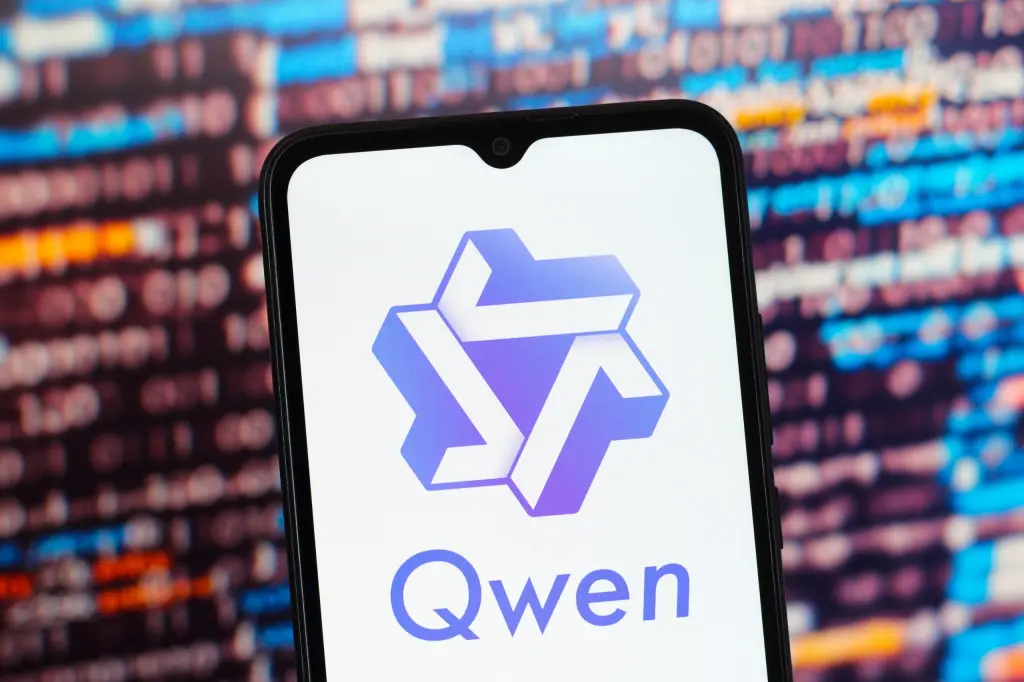
Chinese tech giant Alibaba has launched significant upgrades for its Qwen AI app, transforming the chat interface into a powerful agent capable of executing real-world tasks like ordering food, booking travel, and making payments directly for its users in China.
The new features, which are currently in public testing, signal a strategic push into consumer-facing AI and position Alibaba in the global race to develop practical, task-oriented AI systems.
From Understanding To Acting
The core of the upgrade lies in the deep integration of Alibaba’s extensive ecosystem services into the Qwen chat interface. Users can now access platforms like e-commerce giant Taobao, payment system Alipay, travel service Fliggy, and mapping platform Amap without switching between applications.
This integration allows users to complete multi-step tasks seamlessly within a single conversation. By authorizing Alipay within the Qwen app, users can complete transactions for instant commerce orders, a feature Alibaba plans to expand to more services over time. “What we are launching today represents a shift from models that understand to systems that act—deeply connected to real-world services,” said Wu Jia, Vice President of Alibaba Group.
The Global Race For AI Agents
Alibaba’s move reflects a broader industry trend where tech companies are competing to translate advanced language models into practical consumer applications. This development places Qwen in direct competition with similar initiatives from global and domestic rivals.
Companies like ByteDance and Tencent are also aggressively developing consumer AI in China. Globally, Meta Platforms has been investing in AI systems that can complete multi-step tasks, while OpenAI has rolled out agents capable of booking reservations and filling out forms on behalf of users.
Rapid Growth And Future Capabilities
Since its public beta launch in November, the Qwen app has reportedly surpassed 100 million monthly active users, indicating strong early adoption.
Alongside the publicly available features, Alibaba also unveiled an invite-only “Task Assistant.” This advanced feature is designed to handle more complex duties, such as making real phone calls to restaurants, processing up to 100 documents simultaneously, and planning multi-stop travel itineraries.
Relevance For The MENA Ecosystem
Alibaba’s strategy of bundling diverse services into a single AI-powered interface offers a compelling blueprint for the MENA region’s tech landscape. The concept closely mirrors the “super app” model popularized by regional players like Careem, which integrates ride-hailing, food delivery, and payments.
For MENA startups and established tech firms, Qwen’s evolution highlights the next frontier in user experience: leveraging generative AI to create a unified, conversational interface for a wide range of services. This move underscores the competitive advantage of owning a diverse ecosystem and the immense potential for AI to streamline complex consumer tasks, a trend that is likely to accelerate across the Middle East.
About Alibaba
Alibaba Group’s mission is to make it easy to do business anywhere. The company aims to build the future infrastructure of commerce. It envisions that its customers will meet, work, and live at Alibaba, and that it will be a good company that lasts for 102 years.
Source: Tech in Asia