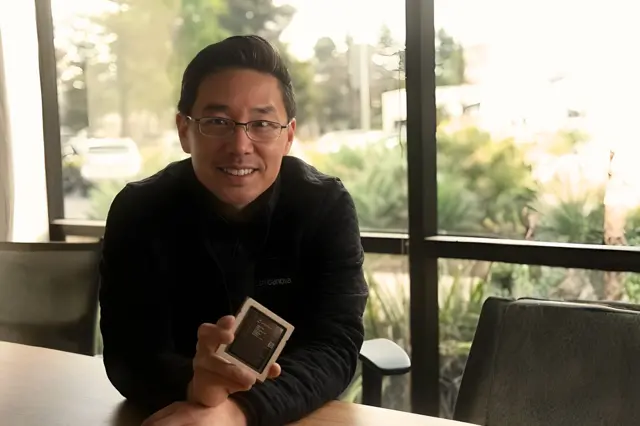





In a significant move to extend its AI influence beyond the home, global tech giant Amazon has acquired Bee, an AI-powered wearable device designed to record, transcribe, and summarize real-world conversations. The acquisition, showcased at this year’s Consumer Electronics Show (CES), signals Amazon’s ambition to compete in the burgeoning personal AI hardware space, placing it in direct contention with devices from companies like Meta.
A New Kind of AI Companion
Bee is a discreet device that can be worn as a clip-on pin or a bracelet, aimed at serving as an everyday AI companion. Activated with a simple button press, it records conversations—such as interviews, meetings, or lectures—and processes them through a companion app.
Unlike traditional transcription services that provide a raw text file, Bee segments conversations into distinct sections like “introductions” or “product details,” summarizing each part for easy review. The device integrates with services like Gmail, Google Calendar, and Apple Health to build a personal knowledge graph, enabling it to suggest follow-up tasks and provide insights based on the user’s interactions and patterns.
However, early reviews note that Bee discards the raw audio after transcription, which may limit its utility for professional use cases where audio playback is necessary for accuracy.
Strategic Play Beyond Alexa
While Amazon already dominates the in-home AI market with Alexa, its ventures into wearable AI through earbuds and glasses have seen limited success. The acquisition of Bee represents a new strategy to capture the “outside the house” environment. Amazon executives see the two AI systems as complementary, with the potential for future integration.
“Bee has the understanding of outside the house, and Alexa has the understanding of inside the house. Of course, there will be a future where these two things come together,” said Bee co-founder Maria de Lourdes Zollo.
Daniel Rausch, Amazon Alexa’s Vice President, echoed this sentiment, emphasizing that combining the capabilities of both AI experiences will ultimately deliver greater value to customers.
Navigating Privacy and Social Norms
The emergence of AI listening devices like Bee raises important questions about privacy and social etiquette. Bee is not an always-on listening device; it requires manual activation, and a green light indicates when it is recording. The company encourages users to seek permission before recording conversations.
Despite these safeguards, the mainstream adoption of such technology could lead to a cultural shift, potentially causing people to self-censor in public spaces. The success of Bee will serve as a crucial test for consumer appetite for a world where real-life conversations are increasingly “on the record.”
Relevance for the MENA Tech Ecosystem
The launch of mainstream AI wearables like Bee by tech giants such as Amazon is a significant trend for the MENA tech ecosystem to watch. For regional startups, this signals a growing global market for personalized AI and hardware integration, potentially inspiring a new wave of localized AI devices tailored to Arabic language processing and regional cultural contexts.
Furthermore, the privacy and data sovereignty questions raised by these devices are particularly relevant in the MENA region, where data regulations are evolving. This could create opportunities for local firms specializing in secure, privacy-first AI solutions. For VCs and founders, Amazon’s move validates the market for ambient computing, suggesting that investments in AI-powered hardware and software that seamlessly integrate into daily life could yield significant returns.
About Bee
Bee is a San Francisco-based technology company that develops AI-powered wearable devices. Its flagship product is a clip-on or wrist-worn gadget that records, transcribes, and summarizes conversations to act as a personal AI companion. The eight-person team was recently acquired by Amazon to bolster the tech giant’s presence in the personal AI and wearable technology space.
Source: TechCrunch