



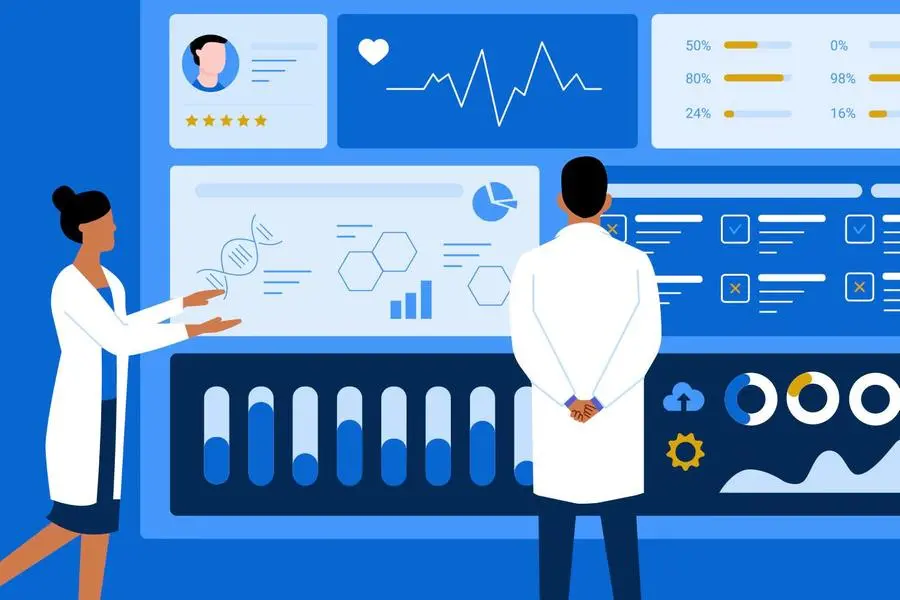
The healthcare sector is moving past the experimental phase of artificial intelligence. According to new 2026 predictions released from Dubai by SAS, a global leader in data and analytics, the next era of life sciences will rely on robust data infrastructure and deterministic AI rather than sudden technological disruptions. Top-tier organizations will treat analytics as a core operational foundation, redefining clinical research, personalized patient care, and pharmaceutical manufacturing.
Quick Facts
-
Deterministic AI and productivity stacks will dominate healthcare operations.
-
Quantum machine learning will accelerate preclinical drug discovery pipelines.
-
Regulatory sandboxes will safely speed up medical technology validation.
Quantum Computing and the AI Productivity Stack
By 2026, healthcare enterprises will move beyond the hype of generative artificial intelligence to adopt comprehensive AI productivity stacks. Deterministic AI engines will handle heavy operational lifting, running everything from medical billing to core administrative workflows, making modern health systems leaner and highly efficient.
At the clinical research level, quantum machine learning (QML) will enter the fold. SAS experts project that QML will tackle predictive toxicology for novel drug candidates. Simulating complex quantum mechanical effects will allow researchers to identify potential safety issues much earlier than traditional models, dropping the failure rate in preclinical research.
Orchestrating Multimodal Data for Precision Medicine
As personalized medicine advances, isolated data points are no longer sufficient. The next phase requires high-quality, continuous data streams from genomics, digital biomarkers, and clinical laboratories. Multimodal real-world data (RWD) will become the standard, integrating structured electronic medical records with unstructured clinical notes, wearables, and medical imaging.
Data quality will dictate AI success. Organizations that secure high-quality, patient-centric data while integrating it across their workflows will lead the market in delivering value and improving clinical outcomes. Advanced large language models (LLMs) are expected to solve interoperability challenges, speeding up data standardization across heterogeneous sources.
Decentralizing Patient Care Through Intelligent Systems
Artificial intelligence will act as a primary driver for expanding health access, particularly in rural and remote areas. Virtual agents will handle triage, care navigation, and patient monitoring, supporting hybrid care teams.
In parallel, in-home care programs will gain major traction. Remote patient monitoring will rely heavily on IoT devices and event stream processing to deliver real-time insights for managing chronic conditions. Value-based programs will shift toward predictive population management, matching community resources with patient needs at scale.
Optimizing the Pharmaceutical Supply Chain
The pharmaceutical sector will build highly integrated, digital supply chains capable of withstanding raw material shortages and global disruptions. Machine learning applications will support real-time process monitoring, automated quality assurance, and predictive maintenance.
Emerging tech tools, including digital twins for real-time simulation and blockchain for compliance traceability, will become standard in manufacturing facilities. Meanwhile, AI agents and copilots will automate manual tasks to accelerate drug submission approvals, though human oversight will remain a regulatory necessity.
Regional Implications for the Middle East Health Tech Sector
While the SAS forecast outlines global trends, the release of these insights from Dubai highlights the shifting center of gravity for health technology. Middle Eastern nations are actively building regulatory sandboxes to test AI models and simulate clinical trials without violating privacy laws.
For MENA founders and investors, the message is clear: the focus is shifting from generic AI applications toward specialized data orchestration. Startups that build deterministic clinical decision-support systems or enable interoperability for regional hospital networks will capture the next wave of healthcare venture funding.
About SAS
SAS is a global provider of data and artificial intelligence solutions. Through industry-specific software, the company enables organizations to transform raw data into trusted, actionable decisions.
Source: Zawya