


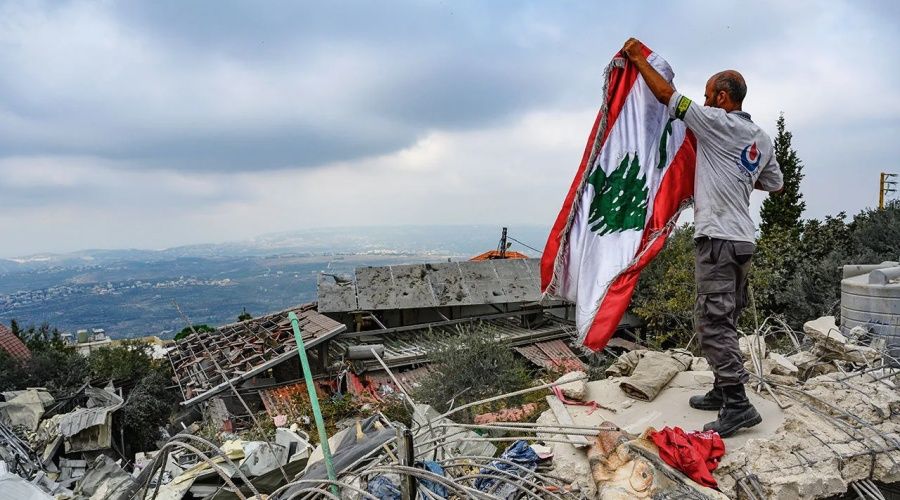
With over one million people displaced in just two weeks, Lebanon is confronting a severe humanitarian emergency alongside a rapidly deteriorating economic baseline. As families shelter in schools and unfinished buildings, the immediate challenge of food security collides with the risk of mass business closures. Attempting to solve both problems simultaneously is Sofra, a newly launched coordination system operating at the intersection of crisis relief and economic stabilization.
Quick Facts
-
Raised over $169,000 within its first week of operations.
-
Delivered 24,000 meals to displaced families across the country.
-
Activated 80 local restaurants to sustain hospitality sector jobs.
Building Rapid Relief Infrastructure With AI Tools
Sofra emerged from a rapid coalition between the Lebanese Ministry of Tourism, Siren, CME, and the Beirut Digital District. The initiative connects three distinct groups that rarely coordinate during emergencies: international donors, local restaurants, and displacement shelters.
To deploy the platform at the speed of the crisis, a network of Lebanese engineers utilized AI-assisted development tools—a method increasingly referred to as “vibe coding.” This approach prioritizes immediate building, rapid deployment, and constant iteration.
Speed in a humanitarian context requires structured governance to succeed. Sofra integrated operational safeguards from day one, including limited data collection protocols, traceable financial transactions, and highly verifiable workflows. This balance prevents the pitfalls of ad hoc crisis responses while ensuring maximum transparency.
Creating a Circular Economy for the Hospitality Sector
Lebanon entered this conflict with a private sector already hollowed out by the 2019 financial collapse. Current movement restrictions and deep uncertainty place the hospitality sector under extreme pressure. During the last major conflict, over 600 restaurants were forced to close, and 80 percent of food-service businesses reported sharp sales declines.
Sofra functions as a real-time allocation engine designed to prevent another mass wave of business casualties. The platform transforms traditional, one-directional aid into a circular economic stimulus loop.
Meals are prepared by operational local restaurants and routed directly to nearby shelters, minimizing transport costs. Demand is dynamically matched to prevent both food shortages and resource duplication.
By directing donor funds to local kitchens, Sofra injects critical liquidity into a collapsing sector. Restaurants keep their doors open, employees retain their wages, and local supply chains continue moving despite severe logistical strain.
Structuring Diaspora Capital for Maximum Impact
Historically, crisis response in Lebanon has suffered from deep fragmentation. Multiple private initiatives often operate in silos, leading to coverage gaps and inefficient resource distribution.
Sofra corrects this structural weakness by acting as connective infrastructure. The state provides coordination, the private sector executes the service delivery, and the global diaspora supplies the funding.
This structured approach is vital given the collapsing operating environment. In mid-March, local gasoline prices surged by nearly 20 percent and diesel jumped close to 30 percent. For food-service businesses operating on razor-thin margins, these cost spikes are existential threats.
By channeling diaspora capital into a coordinated, measurable system, Sofra replaces informal safety nets with a high-impact financial routing model, ensuring every dollar supports both human survival and market resilience.
About Sofra
Sofra is a crisis coordination platform launched in Lebanon to manage food relief and sustain the local economy. Developed through a partnership between the Lebanese Ministry of Tourism, Siren, CME, and the Beirut Digital District, the system connects global donors, local restaurants, and displacement shelters. By routing aid funds through private food-service businesses, Sofra provides meals to displaced populations while simultaneously injecting liquidity into the hospitality sector to prevent job losses and business closures.
Source: Wamda