


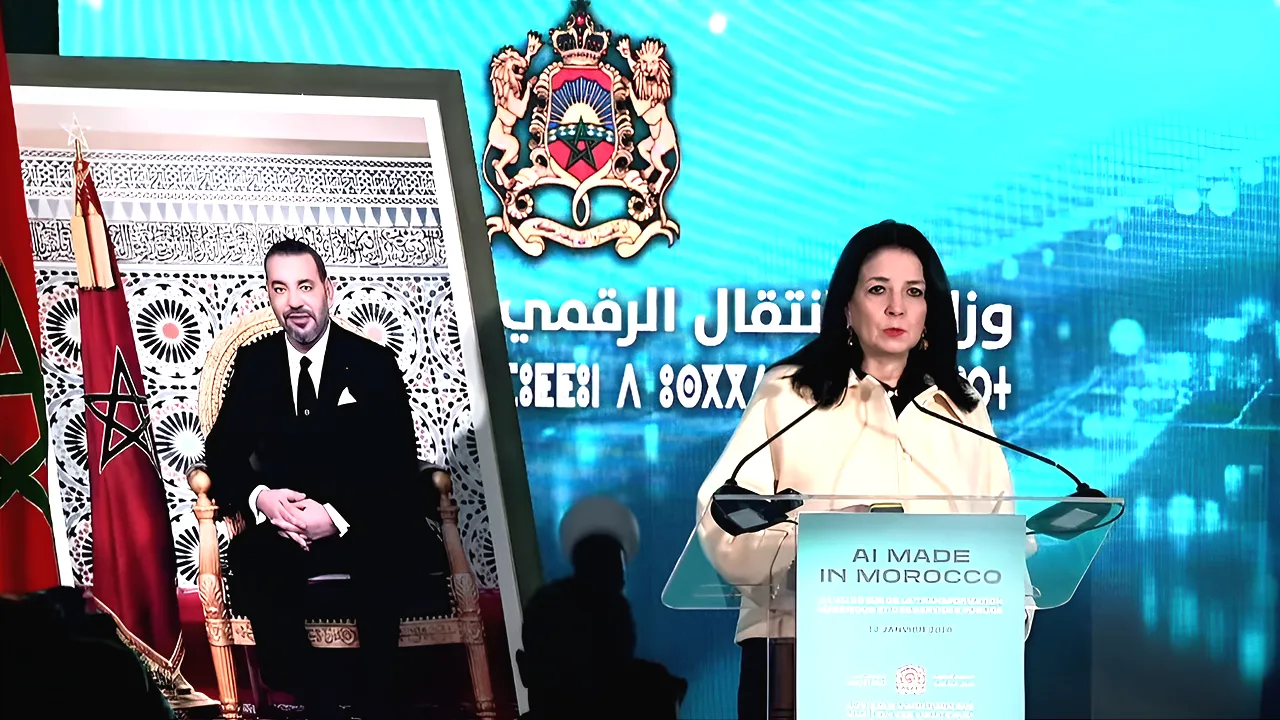
Morocco has officially launched ‘AI Made in Morocco’, a landmark national artificial intelligence initiative designed to position the Kingdom as a regional leader in AI. Announced by Amal El Fallah-Seghrouchni, Minister Delegate to the Head of Government in charge of Digital Transition and Administrative Reform, the strategy sets ambitious goals for 2030: contributing 100 billion dirhams ($10 billion) to the national GDP, creating 50,000 new AI-related jobs, and training 200,000 graduates in critical AI skills.
A Three-Pillar Strategy For Sovereignty and Growth
The ‘AI Made in Morocco’ strategy is built upon three foundational pillars designed to foster a comprehensive and self-sustaining ecosystem. The first, ‘sovereignty and trust,’ focuses on establishing robust governance, regulation, and infrastructure to ensure digital autonomy.
The second pillar, ‘innovation and competitiveness,’ centres on developing human capital, advancing research, and promoting industrial applications of AI. Finally, the ‘impact, adoption, and influence’ pillar aims to drive the widespread deployment of AI across public and private sectors, measuring tangible outcomes and strengthening Morocco’s international standing in the field.
Building National Capacity with Al Jazari Institutes
A cornerstone of the new strategy is the official launch of Jazari Route Racine, the central coordinating hub for the Al Jazari Institute network of Centres of Excellence. This distributed national network is designed to build sustainable AI capacity across all 12 of Morocco’s regions.
Each regional Al Jazari Institute will align its AI specialisation with local academic strengths and economic priorities, such as agriculture, tourism, or energy. The institutes are mandated to deliver training and skills development, conduct applied research, provide shared digital platforms, and incubate and accelerate AI-driven startups, ensuring that technological empowerment reaches historically underserved areas.
Developing Sovereign Infrastructure and Tools
To support its AI ambitions, the Moroccan government is establishing several key strategic assets. These include a National Data Factory to structure and govern public-sector data, a National Software Forge to pool algorithms and government-developed AI components, and sovereign cloud infrastructure, which includes an existing 50 MW facility and a planned 500 MW renewable-powered data centre in Dakhla.
Furthermore, the strategy includes the development of sovereign national language models (NLMs) to address under-represented Moroccan and regional languages, ensuring cultural and linguistic relevance in its AI tools.
Forging Global Partnerships
While focusing on endogenous innovation, Morocco is also actively building international collaborations. The government has signed a memorandum of understanding with the French generative AI company Mistral AI to launch a joint research and development laboratory. This partnership aims to foster long-term cooperation through shared R&D projects and technical exchanges, blending local talent with global expertise.
About AI Made in Morocco
‘AI Made in Morocco’ is a national strategy launched by the Moroccan government to establish the country as a leading producer and innovator of artificial intelligence technologies. The initiative aims to enhance national sovereignty, drive inclusive economic development, and achieve regional leadership in AI. Its key objectives by 2030 are to contribute $10 billion to GDP, create 50,000 jobs, and train 200,000 people in AI skills through a network of regional excellence centres and strategic infrastructure projects.
Source: Middle East AI News