





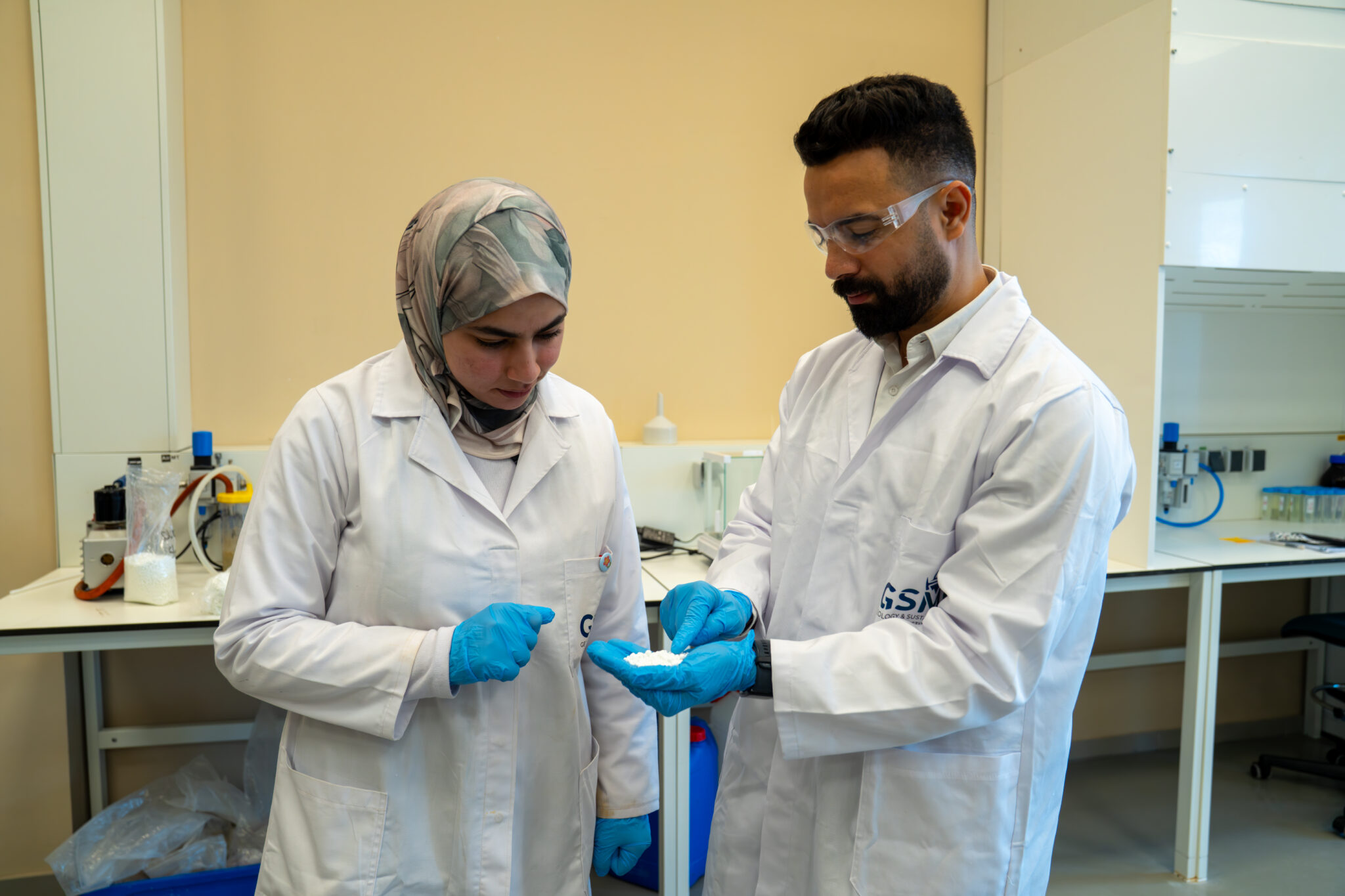
Mining operations globally leave behind massive stockpiles of material that require extensive, long-term land management. Instead of viewing these byproducts as a liability, researchers at Morocco’s UM6P have engineered an agronomic breakthrough. A research team has successfully developed and patented a chemical method to transform dolomite-rich phosphate mining residue into marketable agricultural fertilizers and livestock feed additives.
Quick Facts
-
UM6P patented a novel mining waste conversion process.
-
Method extracts calcium, magnesium, and phosphorus from dolomite.
-
Produces polymer-free fertilizers and livestock feed additives.
Designing a Circular Economy for Morocco’s Phosphate Sector
The innovation, led by Zouhir Balagh and his team at UM6P’s Geology and Sustainable Mining Institute (GSMI), applies a circular economy model to the phosphate industry. Rather than continually extracting new raw materials, the team focused on unlocking the trapped value within underutilized stockpiles.
The method uses phosphoric acid—a chemical already prevalent in phosphate processing—to dissolve dolomite-rich mining residue. This chemical loop frees calcium, magnesium, and phosphorus into a shared solution.
By precisely controlling chemical conditions such as pH levels, the researchers force the precipitation of three distinct agricultural products. The process is now protected by an international patent published through the World Intellectual Property Organization (WIPO), which accepted all key claims regarding the sequence and novelty of the method.
Engineering Polymer-Free Agricultural Nutrients
A major advantage of the UM6P process is its ability to bypass costly and environmentally problematic synthetic components. Many commercial slow-release fertilizers rely on synthetic polymer coatings to control nutrient delivery in the soil.
The UM6P team designed the release performance directly into the mineral structure itself. The process yields three specific, high-demand outputs for the agricultural sector.
First, the team precipitates calcium to create dicalcium phosphate, a feed additive that improves bone health and livestock productivity.
Second, the process recovers magnesium as struvite, a highly valued slow-release fertilizer that provides steady nutrient delivery and boosts crop photosynthesis.
Finally, the remaining phosphorus is converted into hydroxyapatite, a stable compound that functions as a long-lasting, slow-release phosphorus source for soils.
Scaling Sustainable Agritech from Lab to Industry
Moving from theory to practice required an interdisciplinary approach, combining chemistry, geology, mining engineering, and agronomy. The team initially proved the concept using thermodynamic simulations before moving to rigorous laboratory testing and parameter optimization.
Localizing the production of specialty fertilizers and feed additives allows Morocco to diversify its product lines, generate new revenue streams for the mining sector, and lower costs for farmers by removing the need for polymer coatings.
The researchers are now advancing toward pilot-scale validation, economic feasibility studies, and life-cycle assessments. Pending positive results, the UM6P team plans to partner with industrial players to scale the technology, transforming global mining sites from centers of residual waste into producers of vital agricultural inputs.
About UM6P
Mohammed VI Polytechnic University (UM6P) is a premier Moroccan research institution focused on applied sciences, innovation, and sustainable development. Through its Geology and Sustainable Mining Institute (GSMI), the university develops scalable, circular-economy solutions to optimize resource management, agricultural productivity, and the environmental footprint of the global mining industry.
Source: Morocco World News