





The Qatar Computing Research Institute (QCRI) at Hamad Bin Khalifa University has officially announced Fanar 2.0, a significantly enhanced version of Qatar’s sovereign Arabic large language model (LLM). The announcement was made at the second World Summit AI in Doha, marking a major milestone in the region’s push for technological self-reliance and culturally-aware artificial intelligence.
A Leap in Scale and Capability
Fanar 2.0 represents a substantial upgrade over its predecessor, boasting 27 billion parameters, a threefold increase from the 9-billion parameter model released in December 2024. This expansion in model size is complemented by a suite of multi-modal capabilities, allowing it to process text, images, speech-to-text, text-to-speech, and audio understanding. The model has also been specially trained for creative tasks, including the generation of Arabic poetry.
During the summit, QCRI Executive Director Dr. Ahmed Elmagarmid confirmed that the institute is already looking ahead, with work having commenced on Fanar 3.0, which is slated for release in December 2026.
Prioritizing Data Sovereignty and Privacy
A core feature of Fanar 2.0 is its operation within a fully closed ecosystem. This design directly addresses the growing concerns among regional governments and enterprises regarding data privacy and security when using international AI models. By ensuring that sensitive information is not shared or circulated beyond the user’s environment, the platform provides a secure solution for organizations handling confidential data, such as government agencies and large corporations.
This emphasis on sovereign AI infrastructure allows entities to leverage advanced AI capabilities without exposing themselves to external data risks, a critical requirement in the modern digital landscape.
Built on a Rich Arabic Foundation
Fanar 2.0 was built using a massive dataset containing over 300 billion words and more than one trillion Arabic phonetic segments. This extensive training enables the model to deliver a deep, nuanced understanding of various Arabic dialects and cultural terminology, aligning its outputs with local traditions and values.
The development of the Fanar project is a collaborative effort involving key national institutions such as Qatar University, Qatar National Library, the Ministry of Endowment and Islamic Affairs, Al Jazeera, and the Arab Center for Research and Policy Studies, with Google Cloud serving as a technology provider. The original model was trained on a corpus of 1.3 trillion tokens, with a significant curation of data related to Qatari heritage and culture.
Accessibility and Adoption
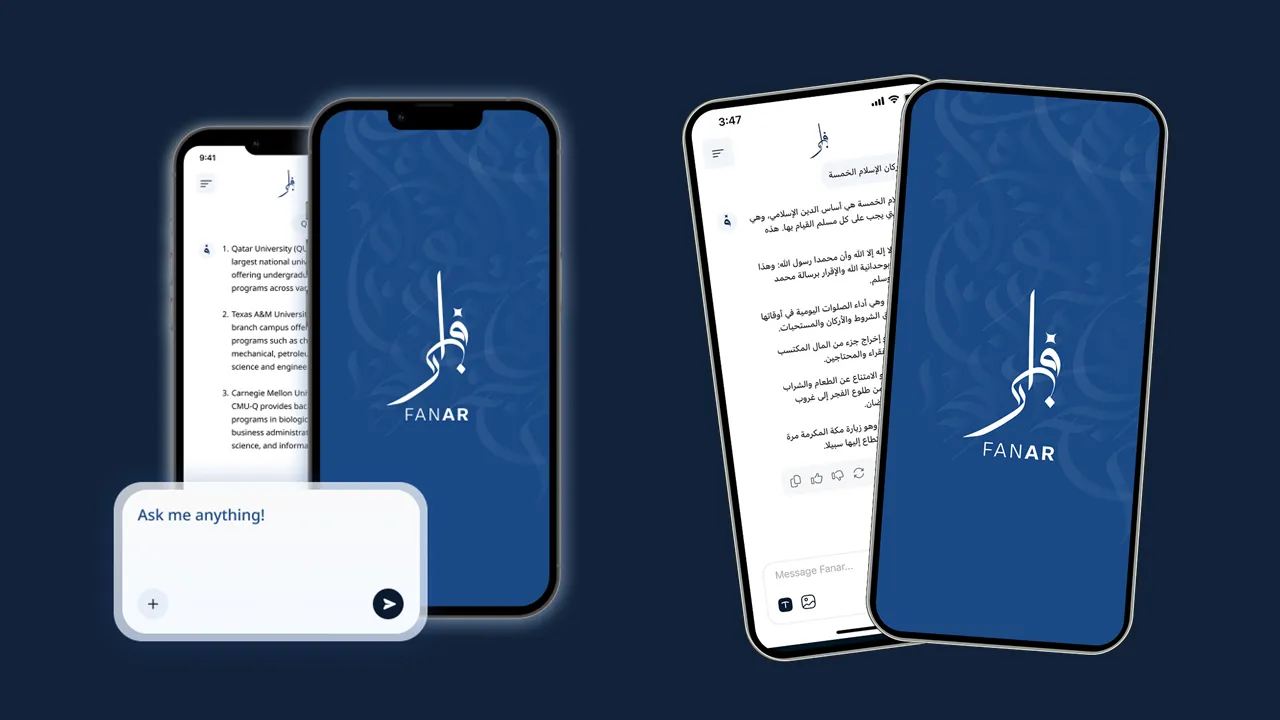
To encourage widespread use, Fanar 2.0 will be made available to users through APIs and a dedicated chat interface. This approach facilitates adoption across various sectors while maintaining the secure, closed environment that guarantees data protection and cultural appropriateness for organizations and individuals throughout the Arab world.
About Qatar Computing Research Institute
The Qatar Computing Research Institute (QCRI) is a national research institute operating under Hamad Bin Khalifa University in Doha. It employs a team of over 100 engineers and researchers specializing in diverse AI disciplines, including AI-driven cybersecurity, data protection, secure language models, Arabic language processing, speech technologies, and applications in education and healthcare. The institute is at the forefront of developing advanced computing technologies to address national priorities and drive innovation in the region.
Source: Middle East AI News