



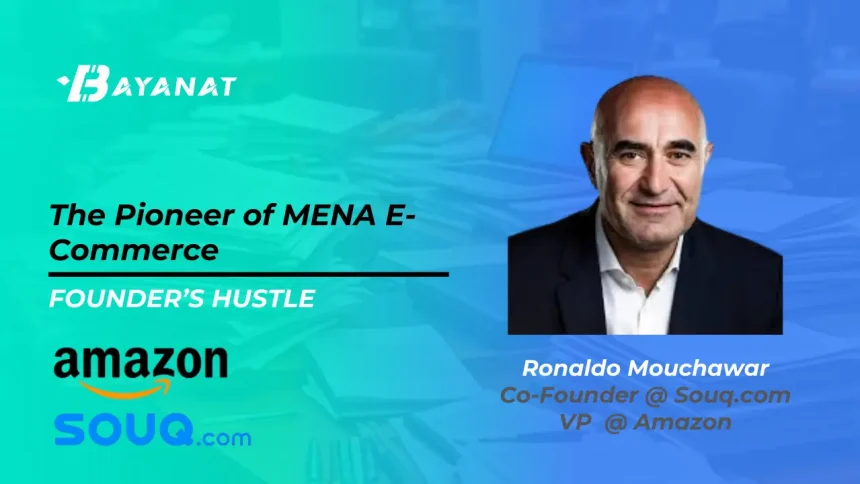
In a comprehensive retrospective on the evolution of the Arab internet, Ronaldo Mouchawar, the founder of Souq.com and a pivotal figure in MENA’s tech history, has detailed the operational and strategic milestones that led to the region’s most significant e-commerce acquisition. From the early days of Maktoob to the $580 million sale to Amazon, Mouchawar’s journey highlights the transition of the regional ecosystem from basic connectivity to sophisticated, large-scale digital commerce.
Strategic Independence And The Maktoob Spin-Off
A defining moment in the Souq.com story was the decision to exclude the e-commerce platform from Yahoo!’s 2009 acquisition of Maktoob Group. Mouchawar revealed that despite bundled offers, the leadership team chose to keep Souq independent, betting on the long-term potential of transactional platforms over general-purpose portals. This independence provided the “financial breathing room” and institutional discipline necessary to build a dedicated e-commerce infrastructure tailored specifically to the Middle Eastern market’s unique challenges.
Solving Logistics And Payments Through In-House Innovation
As Souq scaled, it encountered significant hurdles in regional infrastructure, notably in logistics and financial services. To overcome unreliable addressing systems and a heavy reliance on cash-on-delivery, Souq pivoted from outsourcing to building proprietary solutions. This led to the creation of a dedicated last-mile delivery network and the launch of PayFort, a mobile-first payment gateway. By internalizing these critical functions, Souq managed to reduce friction and build a moat that traditional “online mall” competitors could not replicate.
Institutional Discipline As A Catalyst For Acquisition
Mouchawar noted that the eventual exit to Amazon was not a result of reactive marketing, but of years of rigorous corporate governance. Backed by global investors like Tiger Global and Naspers, Souq maintained “ready” data rooms and high compliance standards long before formal negotiations began. This operational maturity gave Amazon the confidence to acquire the platform, viewing it not just as a source of traffic, but as a sophisticated engine capable of navigating complex emerging markets.
The Future Of AI-Driven “Agentic” Commerce
Looking toward the next decade, Mouchawar identifies Artificial Intelligence and autonomous agents as the next major shift in the industry. He suggests that the traditional “search and click” model is evolving into one where AI agents act on behalf of the consumer to evaluate and complete purchases. In this new era, Mouchawar argues that success will be defined by “precision and reliability,” requiring companies to redesign their operating models around AI-optimized supply chains and automated decision-making.
About Bayanat
Bayanat is a specialized data and insights platform focused on the MENA technology and startup ecosystem. Through its “Founder’s Hustle” series and deep-dive reporting, Bayanat provides regional entrepreneurs, investors, and professionals with strategic analysis of market trends, exit stories, and the evolving digital economy. The platform serves as a knowledge hub for the Arab world’s innovation landscape, offering content in both English and Arabic.
Source: Bayanat