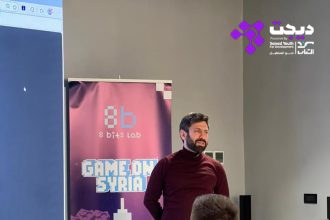






A new policy brief released by Rami Sharrack, the CEO of TATWIR, argues that the primary obstacle to Syria’s economic recovery is no longer a lack of market activity, but a critical “governance gap” that prevents local economies from scaling. Titled “Bridging the Local Economic Governance Gap in Syria,” the paper posits that while Syrian communities have successfully adapted to conflict through localized “de facto” markets, these arrangements remain fragile and incapable of generating sustainable growth without formal regulatory frameworks.
The Shift to Localized Economies
Over the past decade, the Syrian economy has undergone a fundamental transformation, shifting from a centralized system to a series of localized, semi-autonomous economic units. Cities and towns now operate with their own distinct markets and supply chains, driven by community resilience and necessity. However, Sharrack argues that this localization has not been matched by a corresponding evolution in economic governance. Decision-making processes and market regulations remain fragmented or entirely absent, relying on ad hoc practices rather than clear institutional rules. This disconnect results in high investment risks and an inability to manage local resources effectively, leaving the private sector trapped in a cycle of short-term coping rather than long-term development.
Moving Beyond Project-Centric Aid
The brief offers a sharp critique of current international intervention strategies, which Sharrack describes as “project-centric” and overly focused on livelihoods programming. While income generation projects provide essential short-term relief, they often fail to address the underlying structural weaknesses of the market. By treating economic recovery as a collection of discrete activities rather than a systemic building process, donors risk funding initiatives that do not survive beyond their specific grant cycles. The paper highlights that elements such as market regulation, licensing systems, and economic accountability are rarely integrated into program design, despite being prerequisites for sustainable impact.
A Call for Institutional Partnership
To transition from a “coping economy” to one of sustainable capacity, the brief recommends a fundamental pivot in policy. It calls on donors and implementing agencies to stop working around local authorities and instead engage them as partners in regulation and implementation. The recommendations include financing the development of local regulatory frameworks—such as fee structures and commercial regulations—alongside standard project funding. Sharrack emphasizes that without deliberate investment in the “rules of the game” and the institutions that enforce them, Syria’s economic recovery will remain fragmented and temporary.
Read the full brief here: Bridging the Local Economic Governance Gap in Syria: From De Facto Management to Sustainable Local Economic Capacity
About TATWIR
TATWIR is a consultancy and training firm led by Rami Sharrack, specializing in business development and economic recovery in fragile contexts. The organization provides training courses, seminars, consultancy, and mentorship services primarily targeting Arab entrepreneurs and investors in Turkey. TATWIR focuses on strategic planning, livelihoods, and entrepreneurship, working to support local economies and SMEs through collaboration with regional and international stakeholders.
About Rami Sharrack
Rami Sharrack is a Business Development and Economic Recovery Advisor with over 10 years of experience supporting local economies and SMEs in fragile contexts. Currently serving as the CEO of TATWIR and Chair of the Board of Directors at NextGen Innovation and Progress (NGIP), Sharrack specializes in strategic planning and livelihoods. He has collaborated extensively with regional and international stakeholders, including UNDP, GIZ, and the ILO, to bridge the gap between humanitarian aid and sustainable economic development.
Source: Rami Sharrack