


Global artificial intelligence models have historically sidelined the Arabic language, treating it as an afterthought in the rush to build voice platforms around English and other high-resource languages. Addressing this massive regional bottleneck, Abu Dhabi-based CNTXT AI has officially relaunched its Munsit platform, positioning it as a highly accurate, unified Arabic voice engine designed specifically for the Middle East.
Quick Facts
- Supports over 25 distinct Arabic regional dialects natively.
- Secured over 250 enterprise and government regional clients.
- Processed 86 million words and one million audio minutes.
Bridging the Arabic AI Voice Gap
Dialect diversity and a severe lack of quality training data have historically made Arabic difficult for global AI platforms to process at scale. Organizations across the MENA region handle massive volumes of spoken interactions daily, yet many lack the technical tools to accurately capture and analyze this data.
CNTXT AI built Munsit specifically to solve this problem, engineering the platform to process spoken Gulf Arabic with the same accuracy as Modern Standard Arabic.
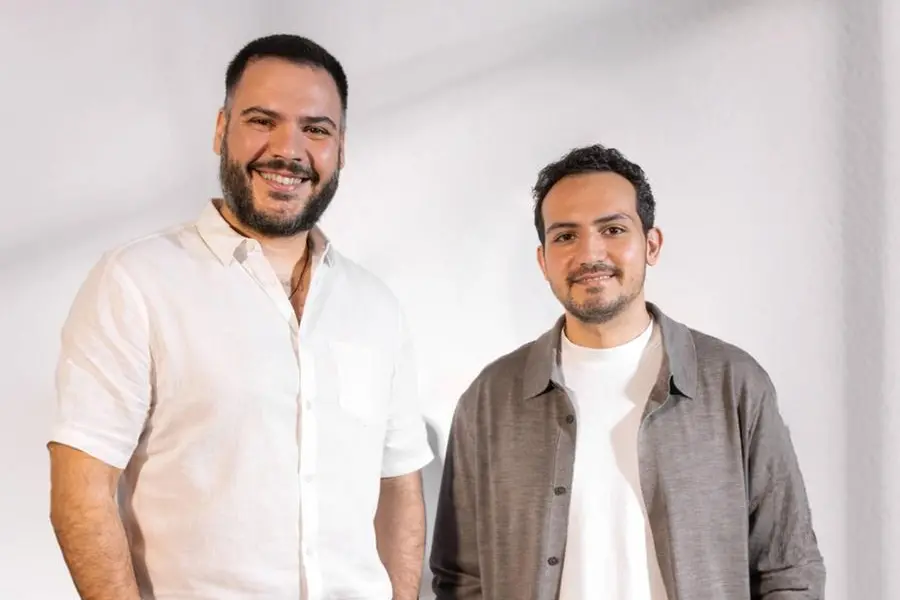
“We are done being spectators in the AI race. Arabic has been an afterthought in global AI for too long,” said Mohammad Abu Sheikh, Founder and CEO of CNTXT AI. “Munsit is proof that when you build for the language from day one, you don’t just compete, you lead. This is the world’s most accurate Arabic voice AI, built here, for our region, and designed to power what comes next.”
Faseeh and the Closed-Loop Voice Engine
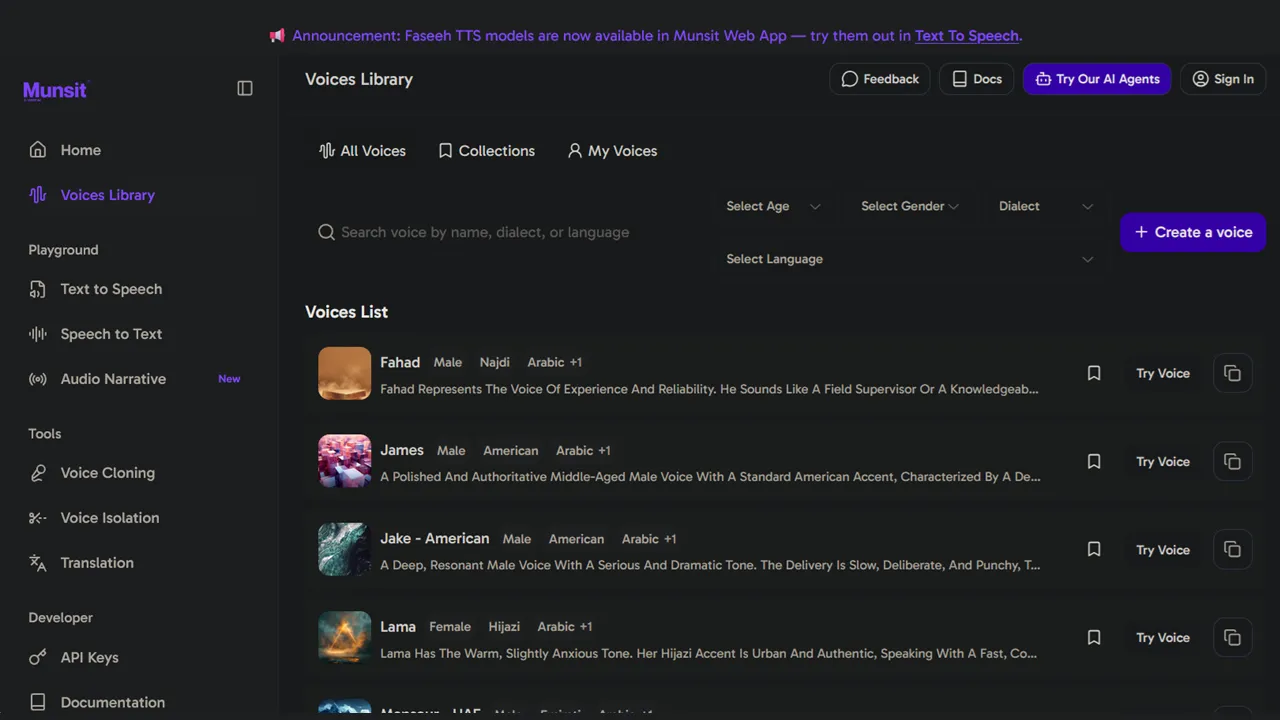
Originally launched as a dedicated speech-to-text model, the newly expanded Munsit platform integrates CNTXT AI’s patented speech recognition technology with a newly developed text-to-speech model named Faseeh.
This combination creates a unified, closed-loop workflow. Organizations can now capture audio, transcribe it, analyze the data, and regenerate natural spoken Arabic entirely within a single system, bypassing the need to string together multiple separate vendor tools.
The platform is accessible via an API, a web workspace, and a mobile application. Consumer-side demand is already highly visible, with the Munsit mobile app acquiring 150,000 users within just two months of its launch. For developers, the API provides a direct route to integrate complex Arabic voice capabilities into existing applications without the extreme cost and time required to build native speech models from scratch.
Data Sovereignty for Regional Enterprises
As digital banking, e-commerce, and online government services expand rapidly across the UAE and the wider Middle East, the volume of voice data is surging. Munsit gives these sectors the ability to actually utilize this trapped data.
Financial institutions can apply the voice platform for mass compliance and quality control. Call centers can analyze entire databases of customer interactions rather than relying on small manual samples. Government entities can transcribe and search citizen interactions in the exact local dialect they were spoken.
Crucially for regional enterprises, CNTXT AI provides flexible deployment options, including cloud, private infrastructure, and fully on-premise setups. This ensures that organizations handling highly sensitive data can maintain complete data sovereignty and keep all voice records within their own infrastructure.
About CNTXT AI
CNTXT AI is an Abu Dhabi-based sovereign artificial intelligence company focused on building and deploying AI solutions that allow organizations to retain full control over their data. Alongside its comprehensive Arabic voice platform, Munsit, the company operates TestAI, a specialized platform designed for assessing AI performance and reliability prior to enterprise deployment.
Source: Middle East AI News