


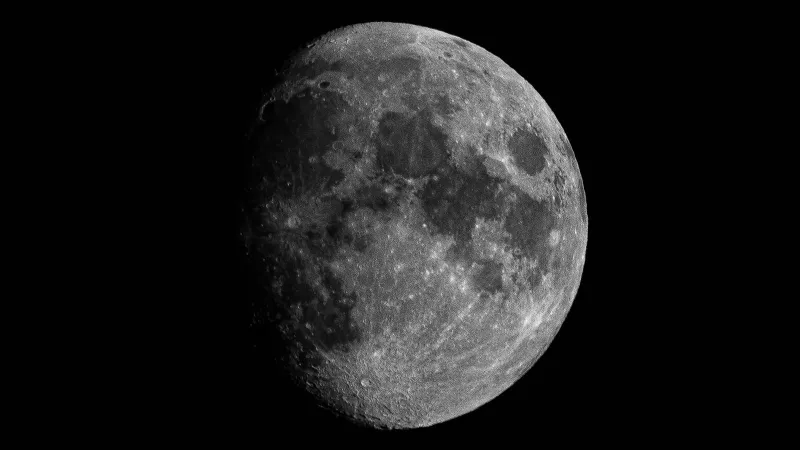
Seattle-based startup Interlune has unveiled an ambitious plan to harvest Helium-3 from the Moon, a rare and immensely valuable resource. With an estimated price of $20 million per kilogram, Helium-3 is approximately 150 times more valuable than gold, positioning it as a key component for next-generation technologies.
The Quest for Helium-3
Helium-3 is a light, non-radioactive isotope of helium that is exceptionally rare on Earth but abundant on the lunar surface. For billions of years, the Moon has been bombarded by solar winds, which have deposited vast quantities of Helium-3 into its soil. On Earth, it is primarily produced in minute quantities from the decay of tritium, a radioactive hydrogen isotope used in nuclear reactors.
The resource’s high value stems from its critical applications in several deep-tech sectors, including powering future fusion energy plants, cooling quantum computers to near absolute zero for optimal performance, and detecting the illicit trafficking of nuclear materials.
From Earth Prototypes to Lunar Operations
To tackle this monumental challenge, Interlune has partnered with Vermeer, a leading manufacturer of industrial and agricultural equipment, to design and build a full-scale prototype of its lunar harvester. While the prototype is currently undergoing testing on Earth, the company is focused on refining its design to withstand the Moon’s unique and harsh conditions, such as low gravity, the absence of an atmosphere, and distinct soil characteristics.
Interlune has already secured agreements with companies like Maybell and Bluefors, who require Helium-3 for cooling their quantum computing hardware. The startup is targeting 2029 to begin its first commercial deliveries.
Why This Matters for the MENA Region
While Interlune is a US-based venture, its mission resonates deeply with the strategic ambitions of the MENA region. Nations like the UAE and Saudi Arabia are aggressively pursuing space exploration through their respective national space agencies, viewing it as a new frontier for economic diversification and technological leadership.
Furthermore, the applications of Helium-3 align directly with regional priorities. The pursuit of clean and sustainable energy sources, like nuclear fusion, is a cornerstone of long-term economic strategies. Simultaneously, the burgeoning tech ecosystems in hubs like Dubai, Riyadh, and Abu Dhabi are increasingly exploring advanced fields like quantum computing. Interlune’s pioneering work serves as a powerful indicator of the commercial viability of space resources, a sector that could present significant future opportunities for MENA’s forward-thinking investors and governments.
About Interlune
Interlune is a Seattle-based startup founded to harvest natural resources from the Moon to create a cleaner and more abundant future on Earth. The company is developing the technologies required to be the first to extract lunar Helium-3, a critical resource for national security, fusion energy, and quantum computing.
Source: Arrajol