


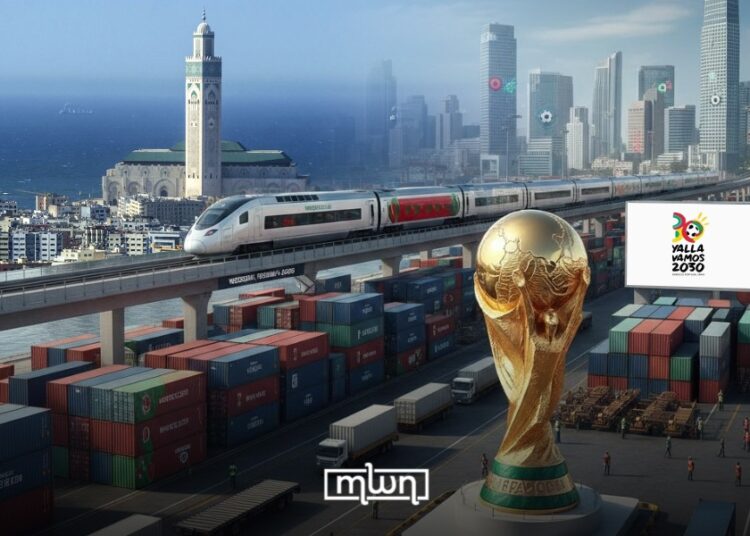
The Kingdom of Morocco is positioning its role as a host of the FIFA 2030 World Cup not merely as a major sporting event, but as a strategic economic multiplier designed to accelerate long-term growth. The nation is leveraging the global spotlight to fast-track investments in critical sectors like infrastructure, energy, and tourism, signaling a new era of opportunity for investors across MENA, Europe, and the Americas.
The World Cup As An Economic Multiplier
Mega sporting events have historically served as powerful catalysts for host nations, boosting infrastructure development, international visibility, and foreign direct investment. Morocco’s case is particularly compelling due to its foundational strengths, including political stability, strong institutions, and a clear national development strategy.
The World Cup is expected to fast-track transport, digital, and urban infrastructure projects while expanding capacity in tourism, hospitality, and aviation. This concerted development aims to strengthen Morocco’s global brand as a secure and modern investment destination, creating a ripple effect of job creation, skills development, and long-term productivity gains.
A New Atlantic Gateway To Africa
Among the nation’s most transformative projects is the development of a new major Atlantic port. This initiative is designed not just for domestic use but to function as a free-trade gateway for African nations.
By establishing this shared logistics and trade platform, Morocco aims to become Africa’s most reliable maritime bridge to Europe, the Americas, and global markets. The port is projected to reduce trade costs for African exporters, foster regional value chains, and anchor the continent’s participation in global supply chains, reinforcing both South-South and North-South trade.
Key Sectors For Investment Momentum
Morocco’s strategy presents a planned, policy-backed growth trajectory rather than speculative development. The World Cup is driving significant momentum across several key sectors, offering clear opportunities for global capital seeking predictability and proximity to key markets.
These sectors include:
- Transport and logistics
- Renewable energy and green hydrogen
- Smart cities and construction
- Tourism, the sports economy, and services
- Manufacturing, automotive, and aerospace
Visionary Leadership Inspiring Investor Confidence
Central to Morocco’s ambitious path is the leadership of King Mohammed VI, whose vision has consistently balanced economic modernization with social development. His long-term commitment to infrastructure, pan-African partnerships, and climate resilience has solidified the country’s international credibility and earned the trust of global investors and institutions.
This leadership underscores a development model measured not only in GDP but also in inclusion and opportunity, values that are increasingly important to modern investors. By aligning with Morocco’s vision, stakeholders are investing in a strategically positioned growth story for the 21st century.
About The 2030 FIFA World Cup In Morocco
Morocco’s hosting of the 2030 FIFA World Cup is part of a comprehensive national strategy to utilize the event as a catalyst for profound economic and social development. The initiative is focused on accelerating investment in key infrastructure, enhancing the country’s global brand, and positioning Morocco as a pivotal economic hub connecting Africa, Europe, and the Americas. It represents a signal to the international community of the nation’s readiness to lead Africa’s next chapter of growth.
Source: Morocco World News