



As digital transformation accelerates globally, access to high-level tech skills and professional opportunities remains heavily concentrated in capital cities. In Jordan’s southern governorate of Karak, however, one founder is actively working to decentralize innovation and create a new map of opportunity.
Dhalal Al-Shamayleh, an electrical and electronics engineer, faced this reality firsthand after graduating in 2014. Finding limited career prospects in her hometown, she chose not to relocate to the capital but to build the opportunities she sought. In 2019, she founded EasyKit Academy, a professional institution dedicated to democratizing tech education and fostering local entrepreneurship.
From Personal Challenge to Community Solution
The digital divide in the Euro-Mediterranean region extends beyond internet connectivity to a geographic concentration of skills, investments, and jobs. This disparity is particularly stark outside major urban centers, a challenge that became the starting point for Al-Shamayleh’s journey.
Instead of accepting the limited job market in Karak as a given, she questioned the status quo and decided to create a solution from within the community. Her vision for EasyKit Academy was to provide practical, affordable, and locally-relevant tech training that responds directly to the needs of the governorate’s population.
Building a Local Tech Hub
EasyKit Academy targets a diverse audience, including teenagers, young adults, teachers, and women. The curriculum is designed to equip students with in-demand skills in robotics, artificial intelligence, programming, and design. The academy also supports educators by helping them integrate technology into their classrooms, even with limited resources.
Specific programs are also tailored for women and young female entrepreneurs, offering training in 3D printing, laser cutting, e-commerce, and digital marketing, empowering them to launch and scale their own ventures.
“The world is witnessing a rapid shift towards advanced technologies, but many local sectors are still far from these transformations, and this is directly reflected in the volume of available economic opportunities,” Al-Shamayleh noted.
Gaining Regional and National Recognition
Al-Shamayleh’s efforts have earned significant recognition. Jordan’s Ministry of Digital Economy and Entrepreneurship appointed her as an Entrepreneurship Ambassador for the Karak governorate, acknowledging her role in promoting social inclusion within the national digital transformation agenda.
In 2024, her initiative was selected for a grant program launched by the Union for the Mediterranean (UfM) to enhance employment and entrepreneurship in the green economy. This support has helped expand the academy’s capabilities and connect its local experience to a broader regional framework.
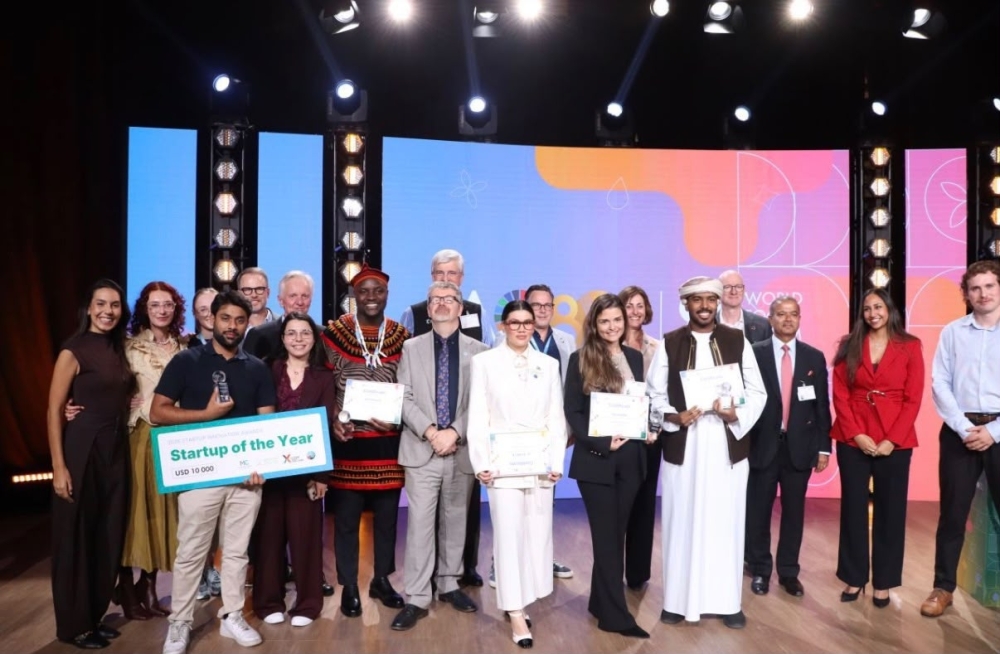
Her journey culminated in winning the “Best Existing Project” award at the “Ilhamha” competition, an achievement she described as a “crowning moment” after “all the challenges we were able to overcome.”
Overcoming Geographic and Social Barriers
While successful, the path has not been without obstacles. Female entrepreneurs in governorates often face greater difficulties in accessing funding, knowledge, and professional networks, alongside societal pressures and the challenge of balancing work and family responsibilities.
Al-Shamayleh emphasizes that solutions must be tailored to specific contexts. “The needs of a woman in a governorate or a remote area are different from the needs of a woman in the capital, so programs must be designed to suit this reality,” she explained.
The COVID-19 pandemic provided an unexpected catalyst, as the shift to digital platforms allowed her to participate in trainings and meetings that once required travel, dramatically expanding her professional network beyond Karak’s borders. “It was as if geography became one place,” she remarked.
About EasyKit Academy
Founded in 2019 by Dhalal Al-Shamayleh, EasyKit Academy is a Jordanian educational institution based in Karak. Its mission is to bridge the digital skills gap outside of major urban centers by providing accessible and practical training in modern technologies such as robotics, AI, programming, and digital marketing. The academy focuses on empowering youth, women, and educators to create sustainable economic opportunities within their local communities.
Source: Almamlakatv