



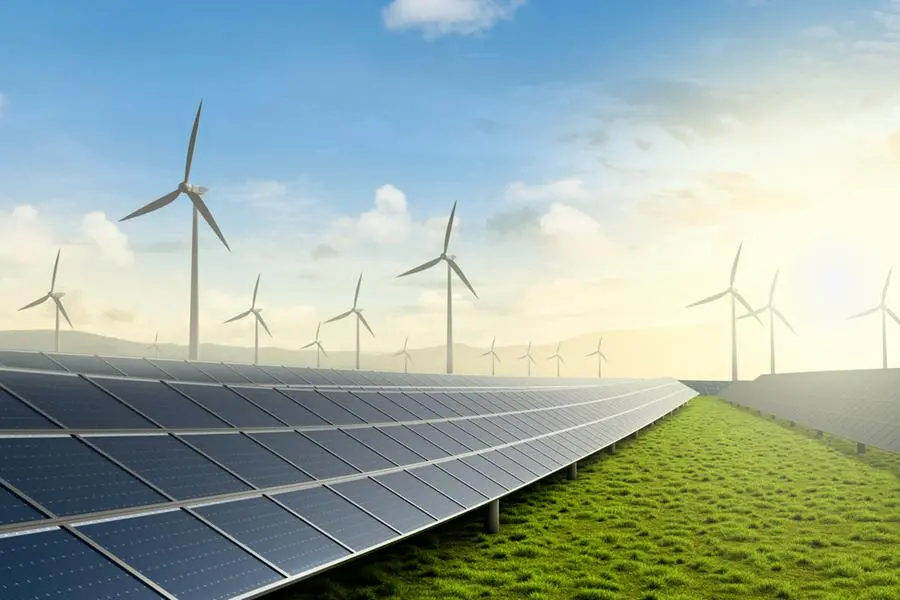
Saudi Arabia has officially entered the top 10 global investors in electricity transition projects for the first time, unseating Canada in 2025. Driven by a massive $34 billion capital injection into solar, wind, and battery storage infrastructure, the Ministry of Energy is aggressively pushing to power 50 percent of the Kingdom’s total energy use through renewables by 2030.
Quick Facts
-
Ranked 10th globally, overtaking Canada in 2025.
-
Invested $34 billion in renewable energy last year.
-
Tendered 64 gigawatts of renewable capacity by 2025.
Surging Capital in the Clean Energy Transition
According to a recent study by the Kuwait-based Arab Energy Organisation (AEO), investments in Saudi renewable energy projects jumped by nearly 70 percent year-on-year in 2025. This historic peak of $34 billion secures the Kingdom’s position as a dominant regional player, even as it preserves its vast hydrocarbon wealth.
While Saudi Arabia’s capital deployment is growing rapidly, it still trails the sheer volume of the world’s top two markets. China and the United States led global transition investments at $800 billion and $378 billion, respectively, accounting for over half of the $2.3 trillion global total.
However, the Kingdom’s growth trajectory remains steep. Over the past five years, domestic investments in clean energy have compounded by 20 to 35 percent annually, laying the groundwork for the government’s target of zero emissions by 2060.
Expanding Capacity and Grid Infrastructure
To meet these ambitious targets, the government is rapidly scaling its infrastructure pipeline. By the end of 2025, the Kingdom had tendered a total of 64 gigawatts (GW) of renewable energy capacity.
Data from the Ministry of Energy indicates that 20.6 GW of that total was tendered in 2025 alone, with 12.3 GW officially connected to the national grid by year-end.
Beyond generation, the country is also heavily investing in storage. Nearly 30 gigawatt-hours (GWh) of battery energy storage system (BESS) projects have been tendered to date, with 8 GWh successfully grid-connected by late 2025.
Jamal Banoun, director of the Riyadh-based SMS economic consulting centre, noted that executing these massive infrastructure plans requires immense capital and coordination.
“Of course any such major projects face challenges despite the availability of funding,” Banoun said. “They include legal frameworks for allocation of large plots of land for major projects, environment permits and compliance, connection of these projects to the national grid, and how to manage risks associated with prices.”
If successful, the scale of these projects will fundamentally alter the regional energy market. Nayef Al-Dandani, an oil engineering professor at King Saud University, emphasized that the baseline goal of 58 GW by 2030—including 40 GW from solar alone—will supply power to at least five million homes, creating immense opportunities for private investors and regional climate tech startups.
Navigating the 130 GW Target and Market Bottlenecks
Despite the influx of capital, analysts warn that the Kingdom may miss its ultimate 2030 target of 130 GW of installed renewable capacity.
A recent analysis by GlobalData points out that Saudi Arabia’s total renewable capacity stood at approximately 13 GW in 2025. The firm projects that total capacity will likely reach 74.2 GW by 2030, which falls well below the official government benchmark.
To close this gap, the Saudi Power Procurement Company (SPPC) has accelerated its auction processes. In October 2025, the sixth round of the National Renewable Energy Programme (NREP) awarded 4.5 GW of new solar and wind capacity. By January 2026, the seventh round qualified bidders for an additional 5.3 GW of combined projects.
Attaurrahman Ojindaram Saibasan, Power Analyst at GlobalData, observed that while mechanisms like renewable auctions and net metering have driven early success, policymakers must scale power purchase agreements (PPAs) for mega-plants. He also noted that regional geopolitical tensions remain a key risk factor for final investment decisions in the Middle East.
About the National Renewable Energy Programme (NREP)
The National Renewable Energy Programme (NREP) is a strategic initiative under Saudi Arabia’s Vision 2030 and the King Salman Renewable Energy Initiative. Designed to maximize the Kingdom’s solar and wind potential, the program aims to diversify the domestic energy mix, reduce reliance on liquid fuels for electricity generation, and stimulate localized manufacturing and private sector investment in the clean tech sector.
Source: Zawya