

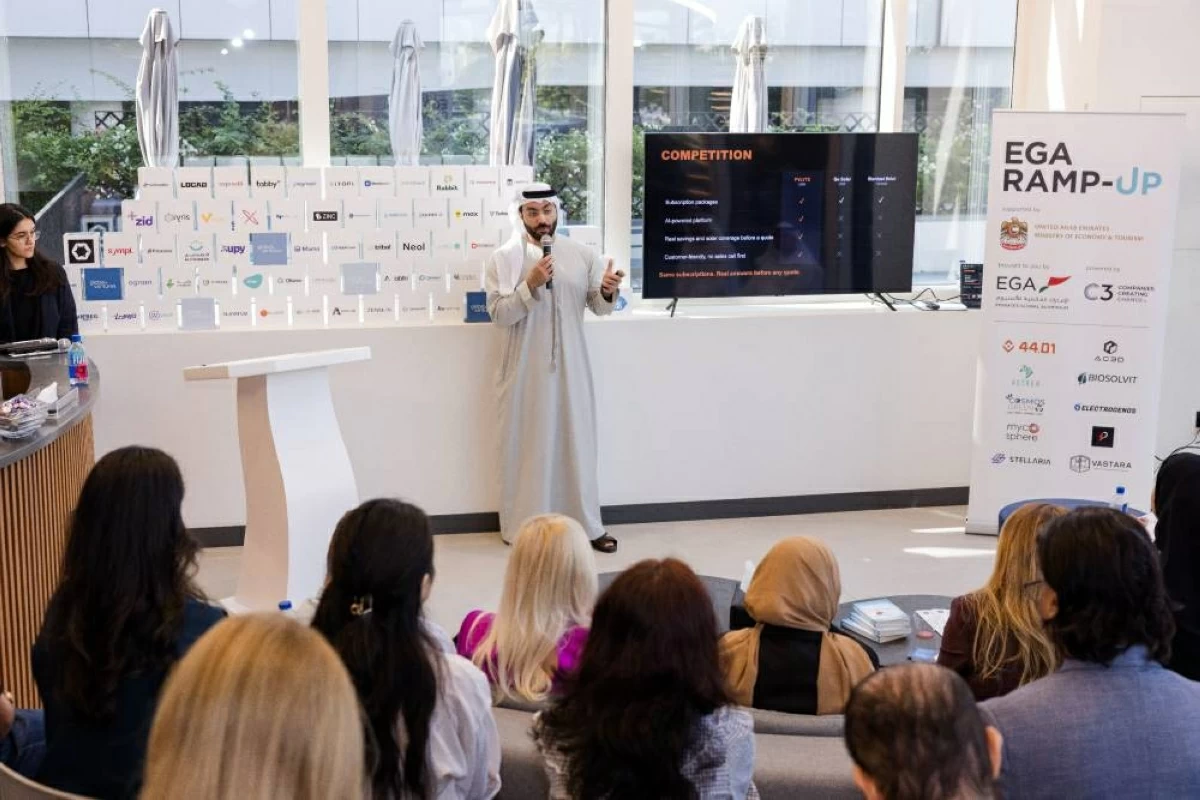



KPMG and Salesforce have published a whitepaper on how organizations in the Middle East can use artificial intelligence to improve customer experience, as pressure grows to deliver measurable returns from AI investment. The report, Reframing the Customer Promise, was previewed at Salesforce Agentforce World Tour Dubai, which brought together more than 2,000 business and technology leaders from government and the private sector.
Developed with the UAE’s Artificial Intelligence Office, the paper argues that AI’s value in customer engagement depends on the data, decisions, ownership and controls behind each interaction. It says organizations need to measure complete customer outcomes, rather than treating faster responses as proof of success.
The report highlights a gap between investment and results. KPMG’s Global AI Pulse survey for the first quarter of 2026 found that 95% of organizations have an AI strategy and plan to invest over the next 12 months, but only 8% report an established return on investment. Salesforce’s tenth State of Marketing report, based on responses from 4,450 marketing decision-makers, found that 86% said AI had raised customer expectations and 83% saw growing demand for two-way conversations across channels. Yet 69% said they struggle to respond promptly because they lack the context needed.
According to the whitepaper, quicker AI-generated replies will not close that gap if the approvals, fulfillment processes and systems behind those responses remain unchanged. It outlines four shifts for organizations: making relevant customer context available when decisions are made, using AI to personalize decisions as well as content, coordinating customer journeys across marketing, sales and service, and contacting customers proactively when a predicted need is reliable, permitted and actionable.
The authors also call for sustained investment in coordinated customer journeys, connected data and technology anchored by a modern CRM platform, and employees equipped to exercise judgment as routine work is automated. Separate chapters examine government, financial services, real estate, energy and resources, and transportation and travel. A 12-month executive agenda sets out a path from prioritizing AI opportunities to gathering evidence in production and building capability at scale.
The findings were discussed at the Dubai event in a panel moderated by Gonçalo Traquina, KPMG Middle East’s Partner for Digital Transformation. Speakers included Harry Nakichbandi, Chief Digital Officer at Aldar, and Omar Haddad, CEO of Al-Futtaim Finance. The discussion focused on moving AI from pilots into production, including the implications for real estate and financial services.
UAE Artificial Intelligence Office Director Dr. Abdelrahman Al Mahmoud said AI is central to developing proactive, integrated government services, while emphasizing the UAE’s focus on keeping people at the center of government development. Traquina said organizations in the region have invested quickly but still need to clarify who owns customer journeys, what AI can be trusted to decide and how results are measured. Salesforce Middle East General Manager Mohammed Alkhotani said shared, trusted customer context across employees, channels and AI is a key part of improving interactions.
Source: Zawya AI