




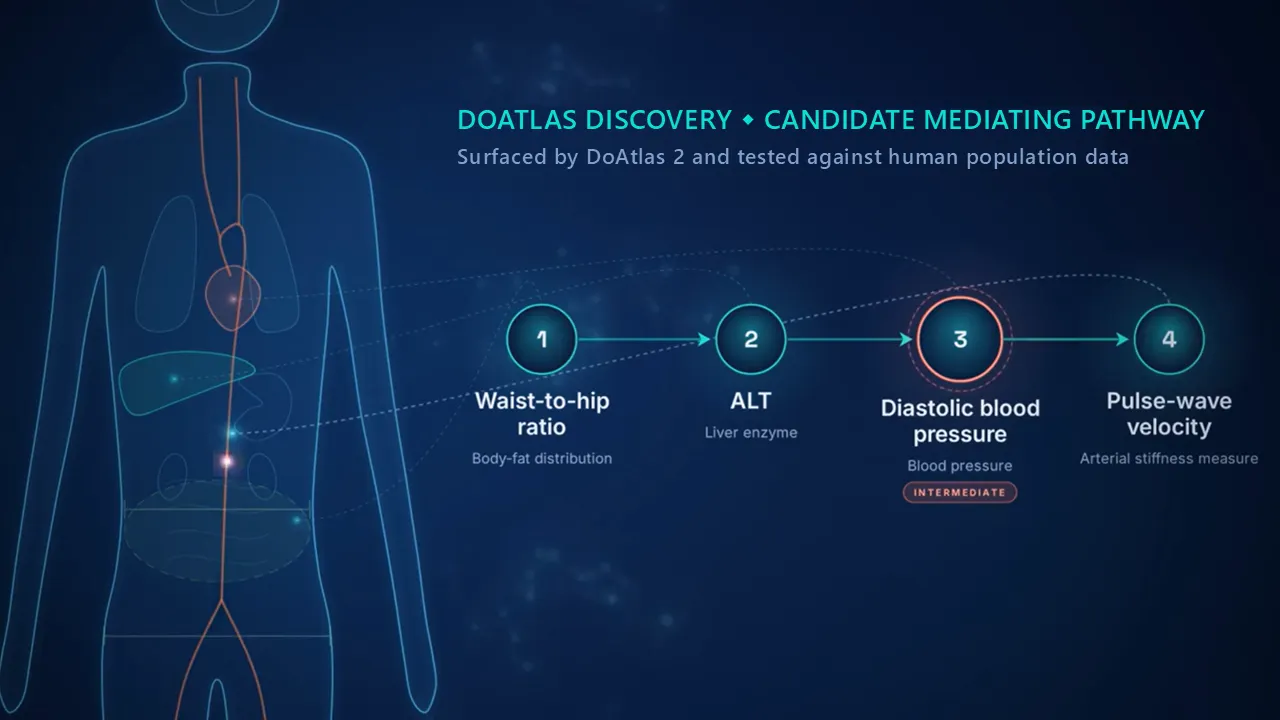
UAE-based Mohamed bin Zayed University of Artificial Intelligence (MBZUAI) has unveiled DoAtlas-2, a causal world model designed to run biomedical research cycles autonomously.
The system can formulate research questions, design studies, test hypotheses using real human data and use the results to determine what to investigate next. According to MBZUAI, it has evaluated 2,031 research questions end to end, drawing on data from more than 720,000 participants across 48 countries.
DoAtlas-2 covers clinical phenotypes, physiological signals, medical imaging and seven layers of molecular omics. Its causal model includes 93,566 biomedical concepts, 149,383 candidate causal relationships and nearly 4.7 million literature-based evidence records.
MBZUAI said the model is designed to make its reasoning more interpretable. Study designs are fixed before results are revealed, failed tests are retained to guide later analysis, and tested claims are linked to their supporting evidence.
The university plans to release DoAtlas as open source in the near future. The initial release is expected to include 1,000 research questions and 30,000 experimental results.
Source: Middle East AI News