



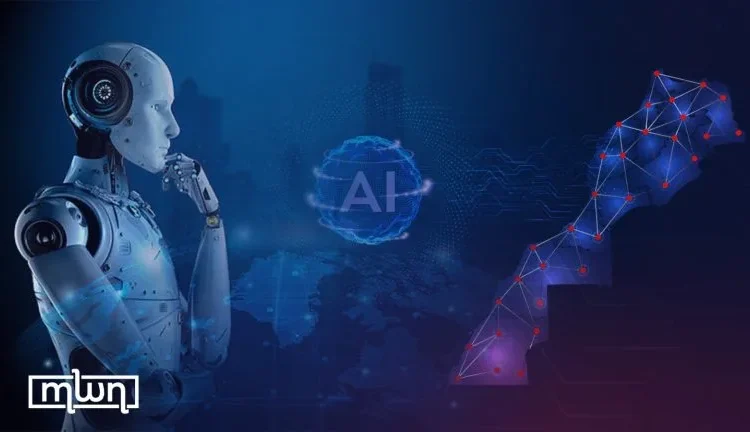
Morocco’s labor market is heading for a seismic shift driven by artificial intelligence, with a new report projecting a net loss of over 1.3 million jobs by the end of the decade. A study released by the African Center for Strategic Studies and Digitalization outlines a profound transformation that goes beyond simple job displacement, warning of a sweeping reconfiguration of work, skills, and economic value chains across the nation.
- Quick Facts
- A Looming Disruption
- Sectoral Breakdown: BPO, Banking, and White-Collar Roles on the Frontline
- The Social Cost: Women and Youth Disproportionately at Risk
- The Great Reskilling Challenge
- A Call for an ‘AI Made in Morocco’ Strategy
- About the African Center for Strategic Studies and Digitalization
Quick Facts
- 1.32 million net job loss projected by 2030.
- 4.6 million total roles to be impacted by AI.
- BPO and banking are among the most vulnerable sectors.
A Looming Disruption
The report details a rapid and disruptive transformation that could outpace the Moroccan labor market’s ability to adapt. By 2030, nearly 1.5 million jobs are expected to face direct pressure from automation, while another 3.1 million roles will see significant changes to their core tasks.
This trend is set to accelerate. The analysis projects that by 2035, the number of high-risk jobs could climb to 2.9 million, affecting nearly 8 million positions in total. Even with the anticipated creation of 450,000 new digital roles by that time, the net job loss would expand to a staggering 2.45 million. The core challenge identified is not just job destruction but the sheer speed of the change.
Sectoral Breakdown: BPO, Banking, and White-Collar Roles on the Frontline
The impact of AI will not be evenly distributed. The offshoring and business process outsourcing (BPO) sectors are identified as the most exposed, with a vulnerability rate approaching 30%. They are followed by the banking and insurance industries at 22%, the automotive sector at 15%, and textiles at 14%.
Administrative functions, routine analytical tasks, and support roles are particularly susceptible to automation. The report suggests these jobs will increasingly shift towards supervisory and quality-control functions, demanding higher-level decision-making. Interestingly, higher education offers limited protection. While 12% of workers without a diploma are at risk, the rate jumps to 17% for graduates, reflecting AI’s growing ability to handle complex cognitive tasks.
The Social Cost: Women and Youth Disproportionately at Risk
The economic shift carries heavy social implications. Women, who make up 20.6% of the workforce, are overrepresented in highly exposed sectors, with the report estimating that between 350,000 and 400,000 female-held jobs are under direct pressure.
The nation’s youth face an even greater challenge. With youth unemployment already at 37.2%, the erosion of entry-level positions threatens to choke off access to the labor market for young Moroccans. The report highlights that over 4.3 million young people are currently not in employment, education, or training (NEET), underscoring the urgency of the situation.
The Great Reskilling Challenge
A critical mismatch between the current workforce’s skills and future market demands is a central theme of the report. Morocco produces about 22,000 digital graduates annually, a figure dwarfed by the projected need. To keep pace with AI-driven changes, between 250,000 and 480,000 people will need to be trained or retrained each year by 2030.
This gap is amplified by the country’s large informal sector, which employs 67.6% of the workforce. These workers typically lack access to formal training opportunities, risking their exclusion from the higher-value jobs of the future.
A Call for an ‘AI Made in Morocco’ Strategy
In response to these findings, the report calls for a comprehensive national strategy to align education, employment, and industrial policy. Key recommendations include creating a national skills framework centered on short, targeted training programs for real-world AI applications.
Policymakers are urged to rethink entry-level roles by enriching them with higher-value tasks like data analysis and quality control. The report also prioritizes upgrading vulnerable sectors, such as transitioning the BPO industry toward data analytics services. Finally, it stresses the importance of building sovereign capabilities through a structured “AI Made in Morocco” approach to foster long-term technological competitiveness.
About the African Center for Strategic Studies and Digitalization
The African Center for Strategic Studies and Digitalization is a research institution and think tank focused on analyzing the impacts of digital transformation and strategic economic shifts across Africa. Its work provides data-driven insights and policy recommendations for governments and private sector stakeholders.
Source: Morocco World News