


Oman’s artificial intelligence strategy is undergoing a fundamental shift, moving beyond consumer-facing applications to focus on the core infrastructure required to power them. According to a senior official, the nation’s next growth phase in AI hinges on building and scaling local data centers, cloud services, and AI computing power, with Otech, the technology arm of Omantel, leading the charge.
Quick Facts
- Operates seven Tier-3 certified data centers.
- Current combined capacity stands at 12 megawatts.
- Supports a national AI platform with 23,000 government users.
Building a Sovereign Cloud Foundation
Hassan Al Lawati, a senior official at Otech, emphasized that the company is aggressively expanding its capabilities to meet rising government and enterprise demand for sovereign digital infrastructure. Speaking at a recent banking technology forum, Al Lawati detailed Otech’s evolution from a traditional hosting service to a full-stack provider of cloud computing, managed services, cybersecurity, and specialized AI infrastructure.
The company now operates seven data centers, including facilities in Muscat and Duqm, and serves approximately 1,200 customers across critical sectors like banking, oil and gas, healthcare, and government. To power more demanding AI workloads, Otech is building out its local computing infrastructure using NVIDIA GPU platforms, targeting use cases in healthcare imaging, computer vision, and seismic analysis.
“The cloud is built in layers,” Al Lawati explained, outlining a structure of data centers, infrastructure, software, and application data. “If you understand this structure, then you can plan and organise your applications in a better way.”
Powering Oman’s Public and Private Sectors
A significant part of Otech’s strategy involves providing the backbone for national AI initiatives. Al Lawati revealed that the company is supporting government AI and Large Language Model (LLM) projects through a national platform developed with the Ministry of Transport, Communications and Information Technology. This system already connects around 23,000 government users.
The push for local infrastructure is also driven by organizations seeking greater control over their data, applications, and cybersecurity as cloud adoption accelerates. Otech is facilitating this through multi-cloud services, leveraging partnerships with global giants like AWS, Oracle Cloud Infrastructure, and Huawei Cloud, with more agreements reportedly in development. This allows enterprises, particularly in the financial sector, to modernize legacy systems and rapidly deploy new fintech applications using containerized cloud technologies.
The GCC’s High-Stakes Infrastructure Race
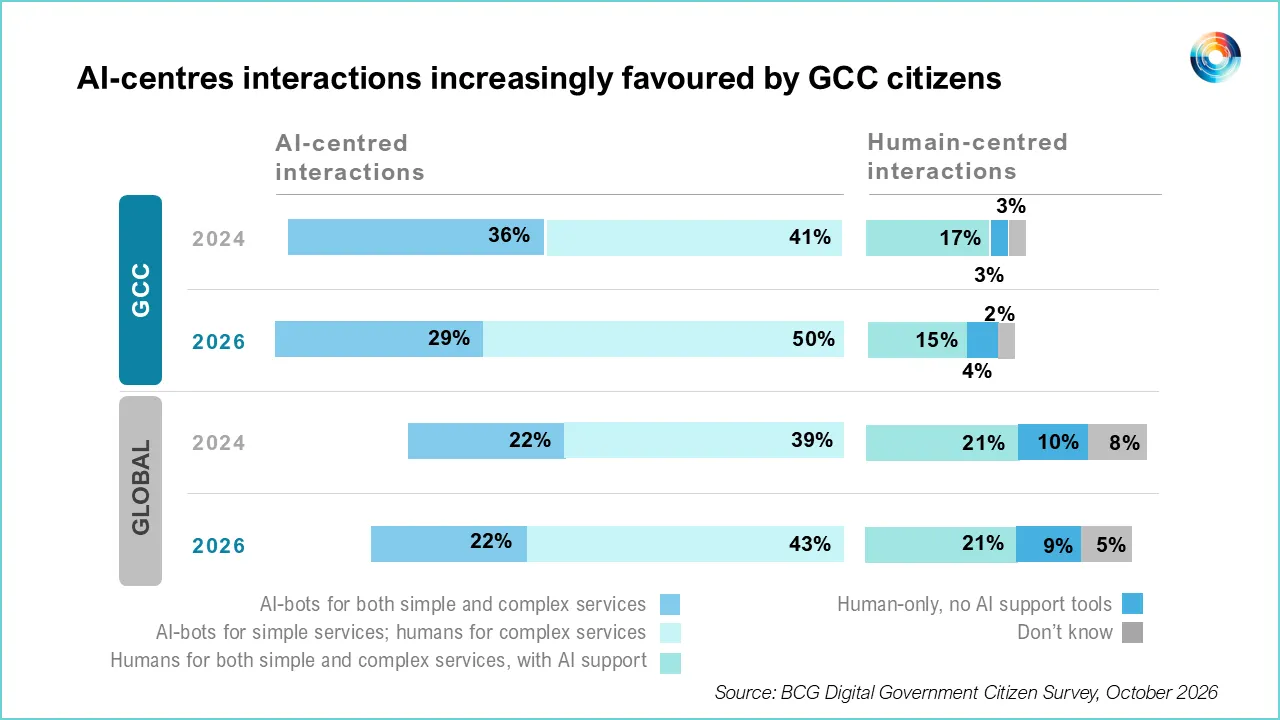
Oman’s focus on foundational tech reflects a broader trend across the Gulf, where nations are investing heavily in data centers and AI computing capacity. As global competition shifts from AI models to the underlying infrastructure that runs them, building sovereign capabilities has become a strategic priority.
For Oman, developing this digital infrastructure is becoming a key pillar of its Vision 2040 economic diversification plan, putting it on par with strategic sectors like logistics, energy, and industry. The move signals a clear understanding that true digital independence and AI leadership are built from the ground up.
About Otech
Otech is the fully owned technology subsidiary of Omantel, Oman’s leading telecommunications provider. The company specializes in providing a comprehensive suite of digital infrastructure services, including data centers, cloud computing, managed services, cybersecurity, and AI computing capabilities to government and enterprise clients across the Sultanate.
Source: Zawya