



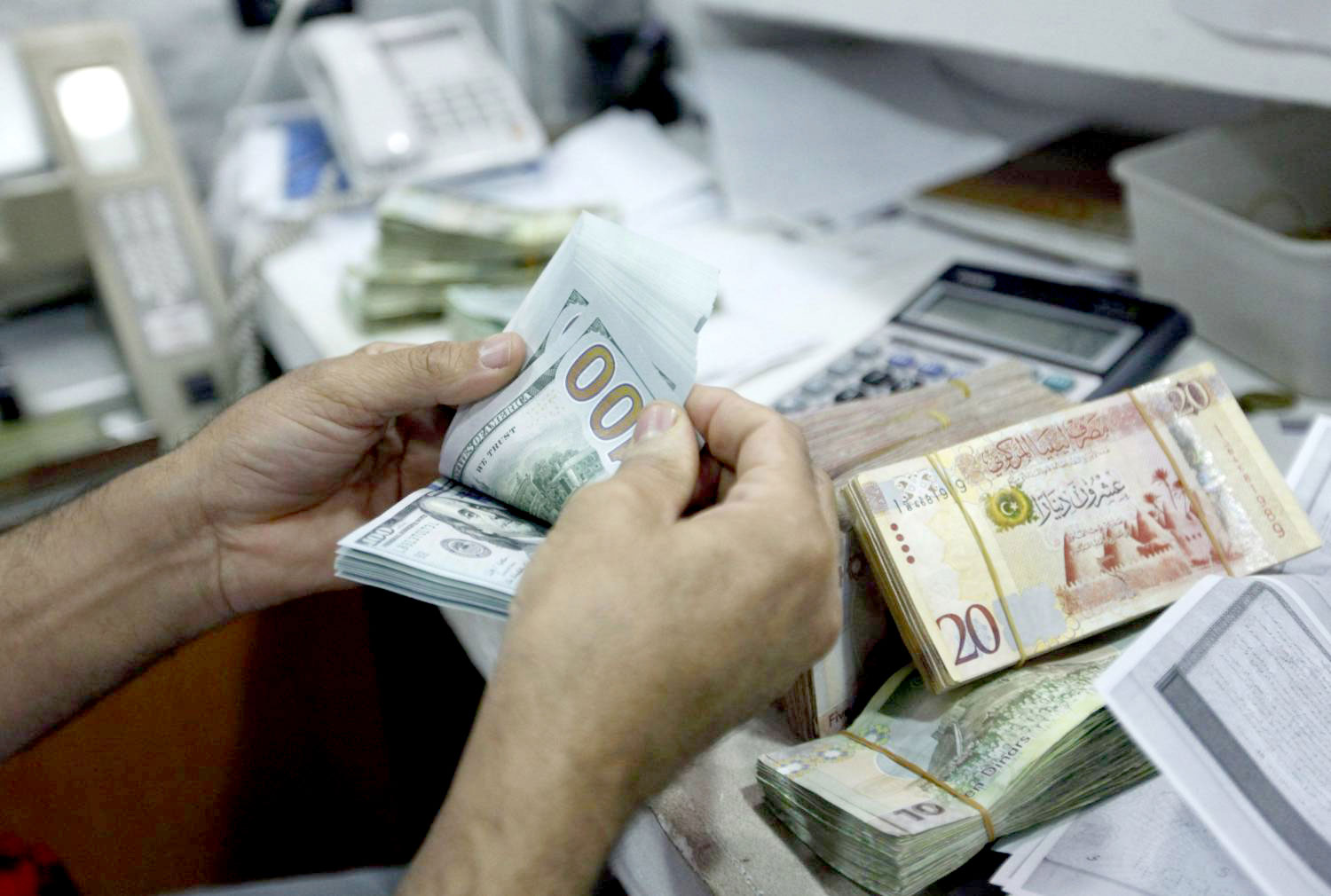
Money laundering has become a hidden route to quick wealth in Libya, according to former Central Bank of Libya board member Marajea Ghaith, who linked its spread to the country’s political and military turmoil.
Speaking to Asharq Al-Awsat, Ghaith said the rise in money laundering was connected to stronger demand for US dollars and the expansion of illegal drug, weapons and human smuggling networks. He added that the problem had grown significantly since Libya’s political and military split in 2014 and was less widespread during his time at the central bank.
Ghaith called for tighter monitoring of financial flows, including checks that compare deposits with customers’ declared incomes and professional activities. He cited the example of a public employee earning 2,000 Libyan dinars a month who suddenly receives a 5 million dinar deposit, saying such transactions should trigger an investigation into the funds’ source and how they entered the account.
He also urged authorities to examine the relationship between the sender and recipient, the origin of the money and the purpose of each transfer, rather than focusing only on transaction size.
Abdel Baset Haroun, director of the Center for Strategic Research and Studies, said money laundering and corruption were damaging Libyan citizens. He warned that illicit funds can be recycled through seemingly legitimate businesses, making their origins difficult to trace, and urged countries receiving such money to pursue those involved.
Source: Libya Update