




The University of Dubai and the Artificial Intelligence Journalism for Research and Forecasting (AIJRF) have launched an advisory guide for governing AI agents, with five Arab universities contributing to its development. The organizations describe it as the first Arab guide dedicated to agentic AI governance.
The guide, titled “AIJRF Code of Ethics and Professional Conduct for Agentic AI” (ACPAI), addresses systems that can plan tasks, interact with digital environments and take actions with varying levels of autonomy. Its authors argue that this shift calls for practical rules on what agents can do, how their actions are monitored and when people must intervene.
The five universities named as participants are the University of Dubai, the University of Khorfakkan and Liwa University in the UAE, along with Badr University in Cairo and Al-Azhar University in Egypt. The announcement also names the Arab Index for Artificial Intelligence in Universities (AIU) as part of the initiative. The guide’s scientific content is being developed by academics, researchers and experts from nine countries, including the UAE, Egypt, Saudi Arabia, Tunisia, Libya and Sudan, as well as the United States, the United Kingdom and Canada.
AIJRF founder and CEO Dr. Mohamed Abdulzaher said the framework is intended to address the growing use of AI agents in areas including government, education, media, banking and healthcare. He said the goal is to support adoption while setting boundaries around autonomy, oversight and responsibility, rather than restricting innovation.
The guide covers human oversight, accountability, data protection, privacy, cybersecurity, transparency, reliability, risk management and institutional compliance. It also offers guidance on setting agents’ authority, documenting and monitoring their actions, correcting errors and suspending or limiting systems when needed. For users, it highlights transparency about the use of AI agents and access to human review when automated actions affect their rights or interests.
ACPAI is organized into three chapters, moving from an overview of agentic AI’s growth and impact to general governance principles and the ethical responsibilities of stakeholders. The announcement says the third chapter addresses four stakeholder groups but does not name them. The guide is intended as a reference for public institutions, universities, businesses, developers and professionals across sectors.
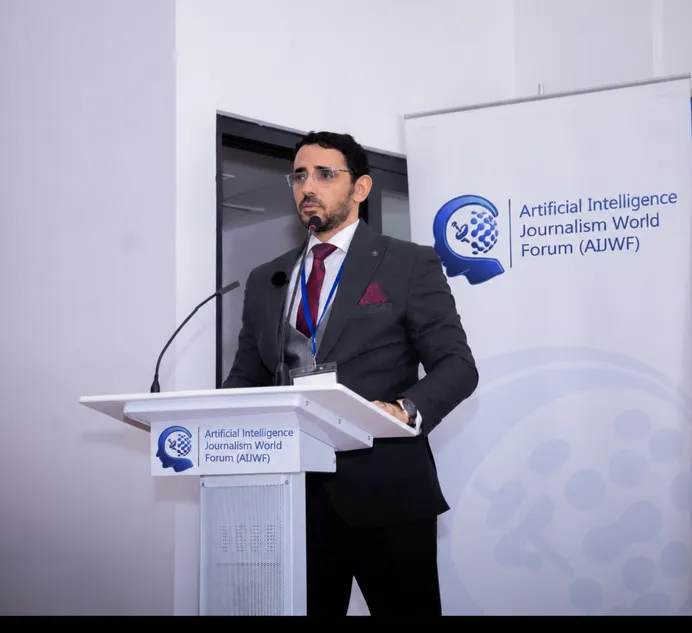
The initiative was announced in connection with the University of Dubai-hosted 6th Artificial Intelligence Journalism World Forum, whose theme includes the impact and governance of agentic AI. AIJRF said the guide builds on its earlier work on AI journalism and AI-generated content, extending the focus from content to the decisions and actions AI agents can take within organizations.
Source: Zawya AI