



Artificial intelligence could help Egypt’s banks reach customers who have struggled to access formal financial services, while also improving efficiency and security as competition from fintech apps grows. Its impact will depend on how effectively banks apply the technology across lending, customer service and risk management.
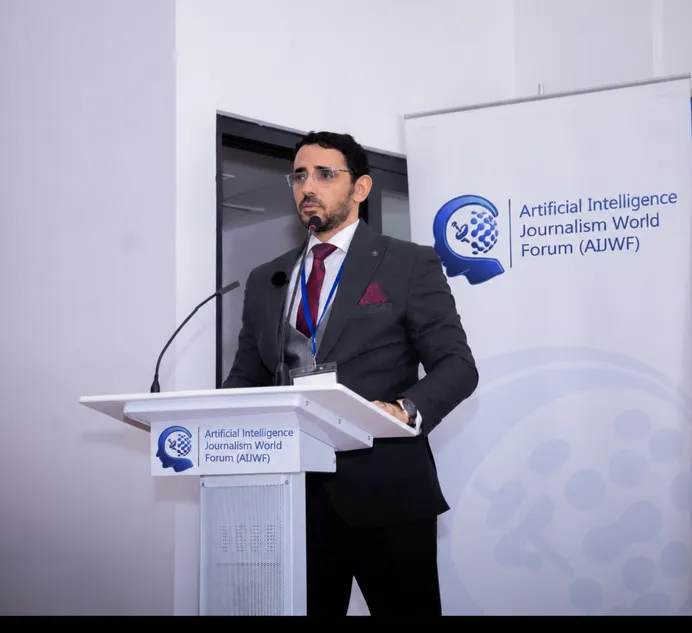
One opportunity is using AI and alternative data to assess creditworthiness beyond conventional credit histories and collateral. Data such as digital transactions, bill payments, business cash flows and repayment behavior could give lenders a broader view of individuals and small businesses, including those with limited banking records. Ramy Refaat, a digital banking and transformation leader speaking in a personal capacity, said AI and machine learning are already enhancing capabilities such as electronic know-your-customer checks and risk-based authentication.
Refaat also pointed to Central Bank of Egypt regulations for its Digital Financial Identity Platform and eKYC services, which he said could make remote onboarding easier and support wider access to financial services. Separately, the CBE’s 2025 annual report said it was converting repetitive manual processes into digital workflows to improve efficiency, shorten turnaround times and strengthen internal controls. The bank also reported expanding the use of AI-driven decision intelligence across business processes.
AI is also being used across banking to automate document processing, support customer interactions and help employees find and apply information. McKinsey estimated in December 2023 that generative AI could create $200 billion to $340 billion in annual value for the global banking industry, equivalent to about 9% to 15% of operating profits. The consultancy cited banks’ reliance on text-heavy work, including compliance, software development and customer engagement, as one reason the sector could benefit.
For banks, the challenge is not only to match the speed and simplicity of fintech services, but to do so without weakening trust. Refaat said risk-based authentication can adjust verification to the risk of each interaction, rather than applying the same level of friction to every customer. He also highlighted the need for ongoing monitoring of transactions involving external APIs, service providers and payment integrations, as well as the ability to detect and contain disruptions.
The source presents AI as a potential tool for making Egypt’s banking system more inclusive, efficient and resilient. It does not detail specific bank deployments or quantify the expected impact in Egypt.
Source: Zawya AI