

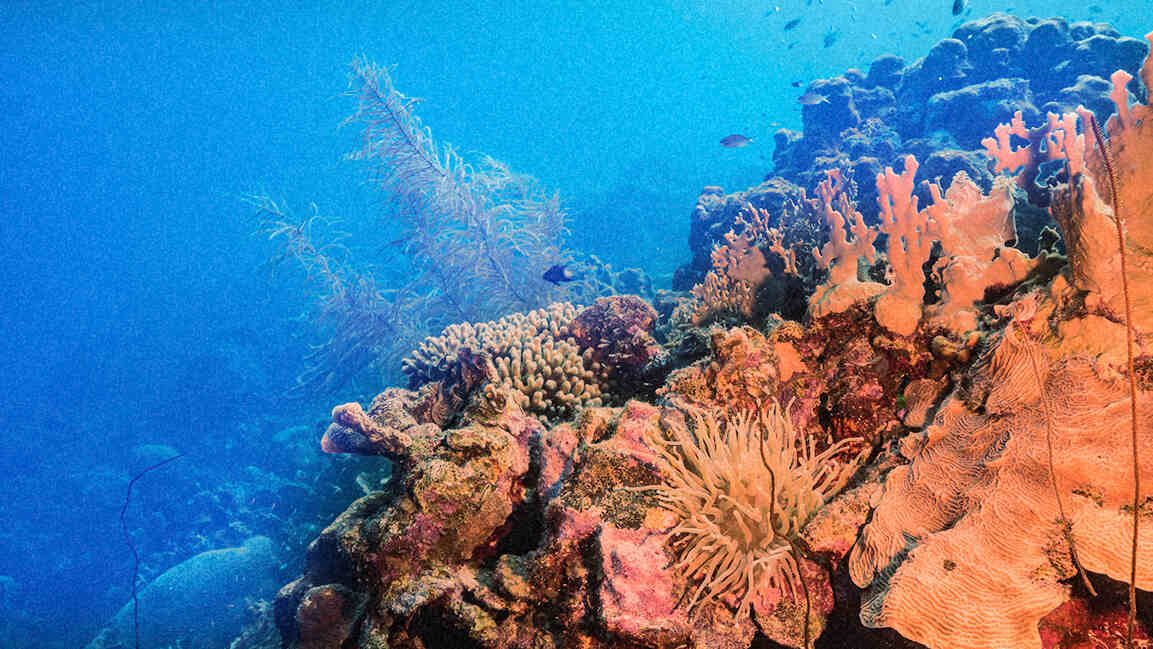

King Abdullah University of Science and Technology (KAUST) has launched a large-scale coral restoration facility on Saudi Arabia’s Red Sea coast, with the capacity to produce up to 360,000 corals annually.
The KAUST Coral Restoration Initiative (KCRI) combines a land-based nursery, sea-based nurseries and a marine research campus. According to the Saudi Press Agency, it aims to support the restoration of more than two million corals across 100 hectares of reef at Shushah Island by 2030, with a longer-term goal of establishing a resilient reef ecosystem by 2040.
Announced at COP31 in Antalya, the facility has been described as the world’s largest coral restoration center. Its launch comes after a global coral bleaching event affected more than 84% of the world’s reef area between 2023 and 2025, according to the US National Oceanic and Atmospheric Administration.
KAUST said Red Sea corals are well suited to restoration research because they have adapted to high temperatures and salinity. KCRI will study native species, develop large-scale cultivation methods and explore ways to improve coral tolerance before reintroducing them to natural reefs.
The initiative includes more than 50 research programs spanning coral probiotics, heat-resistant species, robotics and AI modelling. It also includes eCoral, an AI-powered digital twin designed to guide coral planting and monitor reef conditions. Saudi scientists, divers and aquarists are contributing to the program, which is also intended to build local expertise in marine science and reef restoration.
Source: Fast Company Middle East