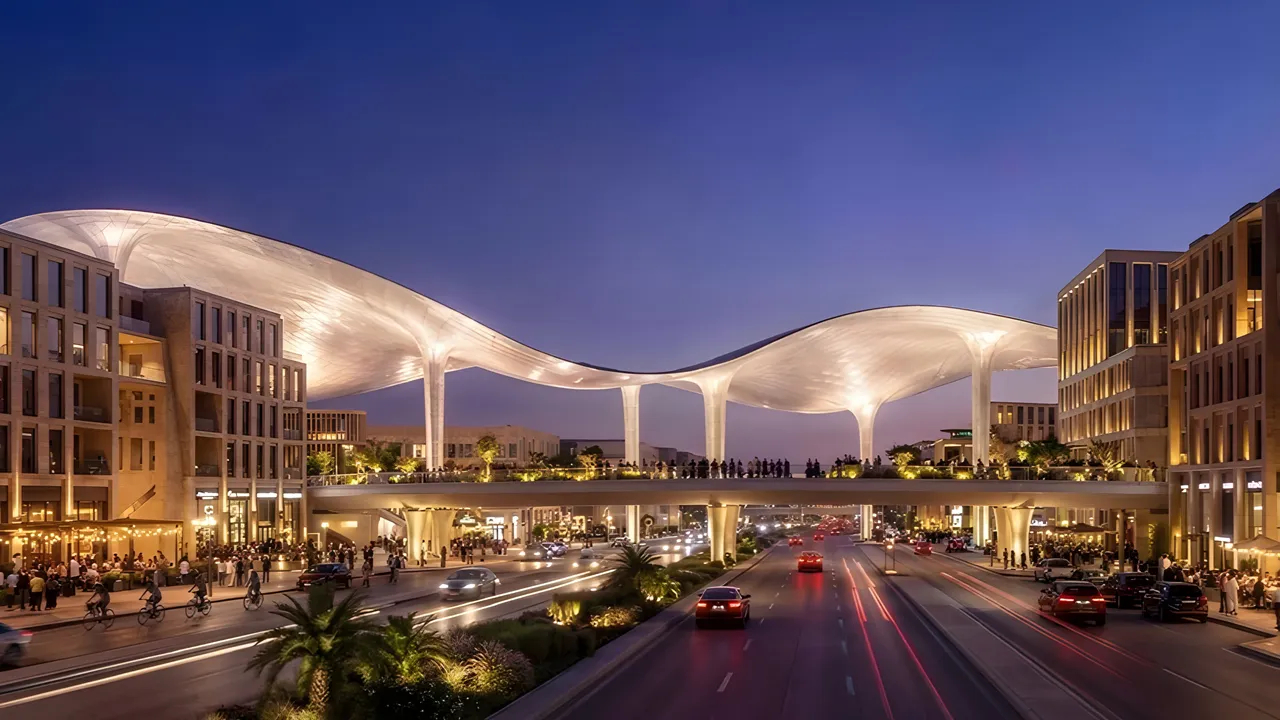



Following the takeover by the Hayat Tahrir al-Sham (HTS) administration in December 2024, Syria has aggressively courted foreign investment, signing a wave of multi-billion-dollar deals with Gulf, Turkish, and Western companies. Major players from Qatar, Saudi Arabia, the UAE, and Turkey are moving quickly to secure contracts for critical infrastructure, including airports, seaports, oil fields, and energy production.
Quick Facts
- $7 billion Qatari-led energy consortium deal.
- Over $6 billion in Saudi investment agreements.
- $4 billion Damascus Airport expansion project.
Qatar Leads the Charge with Energy and Aviation Deals
Qatari firms have emerged as central players in Syria’s economic redevelopment. In May 2025, a consortium led by Qatar-based Urbacon UCC Holding signed a $7 billion agreement to build four gas-fired power plants and several solar energy projects, aiming for a total capacity of 5,000 megawatts. The deal, which also includes Turkey’s Kalyon and Cengiz Energy and the US-based Power International, covers the Kilis–Aleppo natural gas pipeline.
UCC also secured a $4 billion concession to expand Damascus International Airport, a 30-year deal that includes a new terminal and a five-star hotel, with plans to boost annual capacity to 31 million passengers.
Separately, in February 2026, Qatar-based Power International Holding signed a memorandum with US energy giant Chevron for oil and gas exploration in Syria’s Mediterranean waters. These projects are being coordinated through the newly formed Syrian Petroleum Company (SPC), established in October 2025 to consolidate all state oil institutions.
Saudi Arabia Targets Oil and Aviation with Billions
Saudi Arabia has rapidly increased its financial footprint in Syria, particularly after the US lifted Caesar Act sanctions in December 2025. The Kingdom’s investments have focused heavily on the country’s oil sector.
On December 9, 2025, the SPC signed agreements with Saudi firms ADES, TAQA, ARGAS, and Arabian Drilling for technical support and production increases at key oil and gas sites.
In February 2026, Riyadh announced a $2 billion investment fund to develop two airports in Aleppo and establish a joint airline, Flynas Syria, with 49% Saudi ownership. Further agreements include the $1 billion “SilkLink” telecommunications project and water sector cooperation with ACWA Power. In total, Syria and Saudi Arabia signed 47 investment agreements valued at over $6 billion by July 2025.
UAE and France Secure Key Mediterranean Ports
Control of Syria’s coastal gateways has also shifted. The Port of Tartus, the country’s largest seaport, was transferred to the UAE’s DP World in an $800 million deal for a 30-year concession. This replaces a previous 49-year lease signed between Russia and the former Assad administration.
In a related move, the container terminal at the Port of Latakia is now under the operation of French shipping and logistics firm CMA CGM, further cementing foreign management of Syria’s vital trade hubs.
Turkey Deepens Economic Ties Across a New Border
Turkey, a long-time player in northern Syria, has formalized its economic relationship with the new administration. In February 2025, it lifted export and import restrictions, reactivating border gates to pre-war levels.
Turkish firms Kalyon Holding and Cengiz Holding are key partners in both the $7 billion energy consortium and the $4 billion Damascus Airport modernization project. At the Turkey-Syria Roundtable Meeting in August, both sides agreed on ten deals aimed at achieving a $5 billion bilateral trade target. The renewed engagement is being institutionalized through the Turkey–Syria Economic and Trade Joint Committee (JETCO) and the reactivated Turkey–Syria Business Council.
About Urbacon UCC Holding
UCC Holding is a Qatari-based international construction services company and a grade-A licensed builder. With a workforce of over 33,000, the company is recognized as one of the largest contractors in the Gulf region, specializing in infrastructure, building, and development projects.
Source: ANF News