




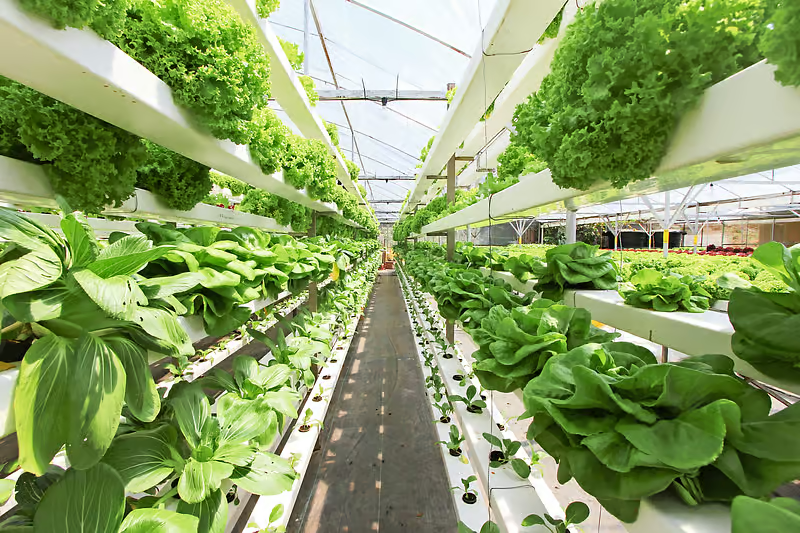
The United Arab Emirates is strategically increasing its investment in vertical farming and artificial intelligence, aiming to build a resilient food security ecosystem and reduce its heavy reliance on imports. This national push positions agritech as a critical component in addressing the challenges of a desert climate, including water scarcity and limited arable land.
Quick Facts
- Strategy targets reduced dependence on food imports.
- AI and automation are central to the plan.
- Focus on building a sustainable, tech-driven food ecosystem.
From Scarcity to Sustainability
Traditional agriculture in the UAE is constrained by harsh environmental realities. Extreme temperatures and a lack of fresh water make conventional farming difficult and resource-intensive. In response, the country is turning to technology-driven solutions that can produce higher yields with a fraction of the natural resources.
Controlled-environment agriculture, particularly vertical farming, has emerged as a viable alternative. These indoor systems allow for year-round crop production while using significantly less water and land than conventional methods. The move is gaining momentum as global supply chain vulnerabilities and climate change underscore the need for robust local production.
The Tech Stack Behind the Harvest
Artificial intelligence is at the core of making these indoor farms efficient and commercially scalable. AI-powered systems, combined with advanced sensors and data analytics, optimize every aspect of the growing process. These technologies monitor crop health, predict yields, and automate climate controls to ensure ideal conditions.
By leveraging machine learning, operators can fine-tune water consumption, manage energy use, and minimize operational waste. This data-driven approach is transforming large-scale indoor farming from a niche concept into a cornerstone of the UAE’s national food strategy.
A National Strategy for Agritech Innovation
The UAE’s agritech sector is seeing a convergence of support from government agencies, technology firms, startups, and investors. This collaborative effort is accelerating the development and adoption of sustainable farming solutions across the country.
Several large-scale vertical farming projects are already operational, fueled by government initiatives and research partnerships designed to promote advanced agricultural technologies. As the demand for locally grown food increases, AI-enabled farming is seen as essential for enhancing the nation’s food supply resilience and meeting its broader sustainability targets.
About the UAE’s National Food Security Strategy
The UAE’s focus on agritech aligns with its long-term vision of using innovation to solve strategic national challenges. The National Food Security Strategy 2051 aims to make the UAE the world’s best in the Global Food Security Index by developing a comprehensive national system based on enabling sustainable food production and defining elements of the national food basket. This includes leveraging modern technologies to enhance local production and international trade partnerships to diversify food sources.
Source: meatechwatch