


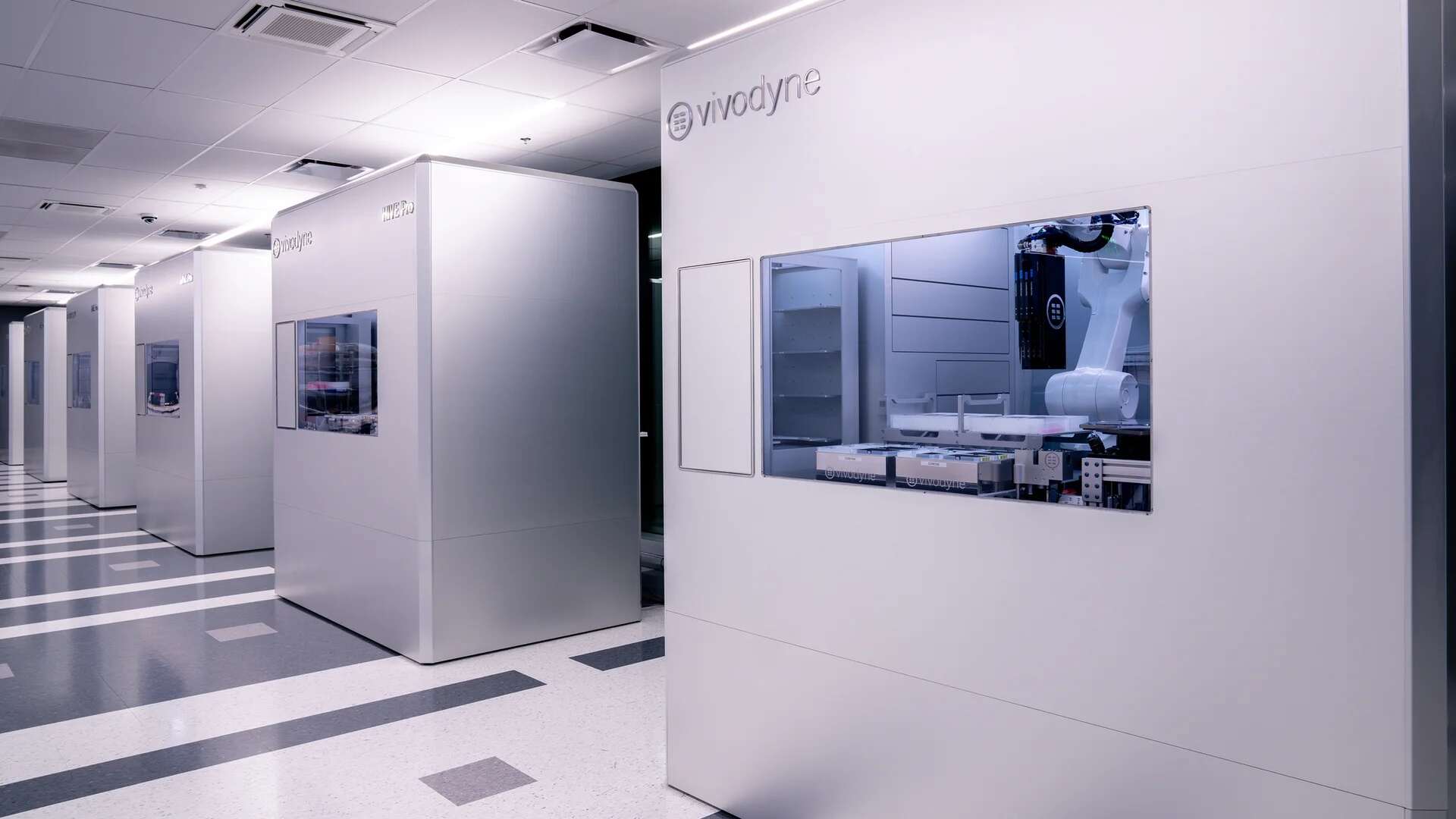
Vivodyne is expanding a robotic platform that grows human tissue and uses AI to test potential medicines, offering drug developers an alternative to relying primarily on animal studies.
The startup’s system includes 12 robotic labs, known as “hives,” which the company said can run controlled trials on more than 3 million human tissues each year. The platform grows cells from human samples on biological chips, where they form tissue structures that replicate some functions of organs such as the liver and kidney.
Robots can deliver drugs, apply cell therapies, modify genes and monitor the resulting changes. AI then uses the data to design further experiments. Vivodyne said the system can test thousands of compounds across different tissue types in parallel, while continuously tracking responses.
The company is already working with major pharmaceutical companies, according to CEO Andrei Georgescu. He said the platform has helped identify unsafe drug candidates, select targets for new medicines and improve drug-delivery vehicles.
Vivodyne’s approach is also designed to shorten testing timelines. Georgescu said experiments that could take 18 months to begin with genetically modified mice can go through around 25 testing cycles on Vivodyne’s platform during the same period.
Animal testing remains part of drug development, although changes to US law in 2022 removed its mandatory status before human clinical trials.
Source: Fast Company Middle East