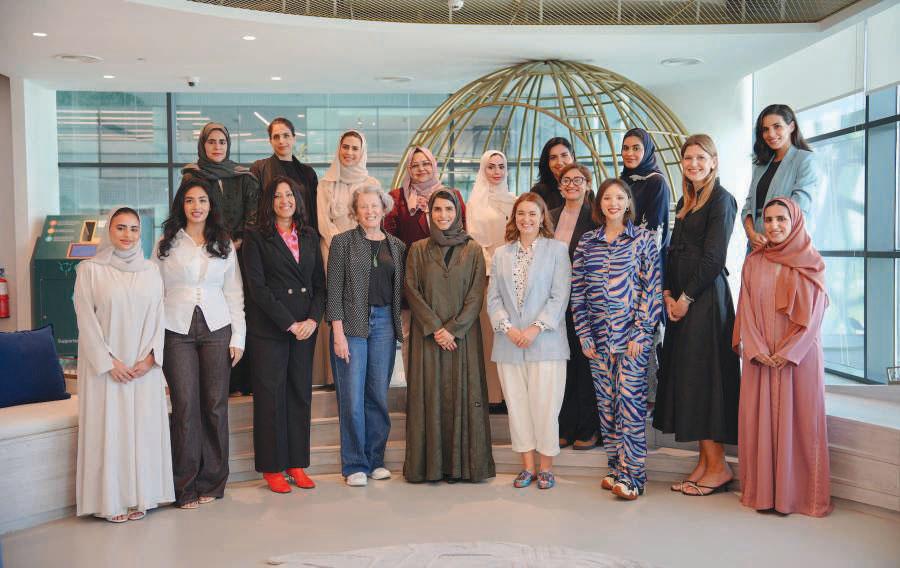






Impact Management, a Saudi-based consultancy specializing in strategy and impact design, has collaborated with Field Ready MENA to release a new report titled “Innovation Labs Cases.” The comprehensive document offers a strategic roadmap for establishing innovation labs within government, private, and non-profit sectors, drawing on lessons from nine global leaders in the field. The report argues that in a rapidly changing geopolitical and technological landscape, traditional forecasting is no longer sufficient, making innovation labs essential safe havens for experimenting with solutions before they reach the market.
The Economics Of Failing Fast
A central theme of the report is the Silicon Valley cultural rule of “Fail Fast”. The authors posit that innovation labs should be environments where failure is not only permitted but expected, as it is significantly cheaper to fail within a lab environment than to launch a flawed product into the mass market. The report emphasizes that if a failure costs one hundred riyals inside the lab, a market failure could cost millions, making the speed of learning the primary metric of success.
Global Models Of Government Innovation
The report analyzes diverse government-led initiatives to highlight different approaches to public sector innovation:
- United Kingdom: The UK Cabinet Office’s Policy Lab, established in 2014, is cited for its “open policy making” approach. By using tools like ethnographic film to document citizen experiences, the lab managed to save £3.7 million in a single police digitization project.
- Denmark: The National Centre for Public Sector Innovation (COI) is highlighted for creating the “Innovation Barometer,” the world’s first official statistic to measure government innovation, proving that “what gets measured gets managed”.
- Singapore: The report points to GovTech as a leader in digital transformation, noting its massive investment of SGD 1 billion in innovation over five years and its use of AI to automate 80% of government systems.
Corporate And Humanitarian Case Studies
In the private sector, the report examines Alphabet’s “X, The Moonshot Factory,” which actively rewards teams for killing projects early if they find fatal flaws, a strategy that led to the creation of successful spinoffs like Waymo. It also details how Lego’s Future Lab saved the company from near bankruptcy by utilizing small “smart rebel” teams that tested products in four-month cycles rather than the standard 18 months.
On the humanitarian front, the document showcases Field Ready, which revolutionizes aid by manufacturing supplies locally in disaster zones using 3D printing, achieving 60-80% cost savings compared to traditional supply chains. It also covers the UNICEF Office of Innovation, which established the UN’s first venture capital fund to invest in open-source blockchain and AI solutions for children.
Strategic Lessons For The Region
The report concludes with five critical lessons for MENA organizations looking to establish their own labs:
- Build a Culture of Innovation: Success depends on psychological safety and incentives that reward calculated risk-taking rather than just technical tools.
- Engage Beneficiaries: Innovation must be human-centered, involving citizens or users as co-designers rather than just survey subjects.
- Balanced Portfolios: Organizations should manage innovation like an investment portfolio, balancing high-risk “moonshots” with low-risk, proven improvements.
- Leadership and Measurement: Innovation must be integrated into the organizational structure and protected by senior leadership to survive budget pressures.
- Localization: Solutions must rely on local resources and context, avoiding the trap of simply importing external ideas.
About Impact Management
Impact Management (Athar) is a Saudi institution specializing in strategic consulting and impact design. It contributes to sustainable development by empowering government and non-profit entities to build high-impact initiatives based on innovation, governance, and long-term vision. The firm works to transform complex research into human-centered products and tools that advance society.