




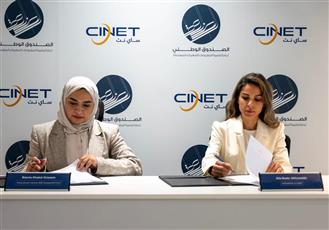
Kuwait is modernizing its entrepreneurial financial infrastructure by building data-sharing systems that lower borrowing barriers for small businesses. In a major step toward enhancing credit transparency and minimizing commercial lending risks, the National Fund for SME Development has signed a strategic Memorandum of Understanding (MoU) with the Credit Information Network Company (Ci-Net). The agreement formalizes a structured data-exchange infrastructure designed to integrate history-backed credit data directly into the country’s small and medium enterprise financial ecosystem.
Mitigating Asymmetric Information in the Credit Ecosystem
The collaborative data framework addresses a structural challenge within the Kuwaiti corporate financing landscape: the lack of comprehensive, centralized historical credit data for early-stage companies. By consolidating credit footprints, repayment trajectories, and financial facility utilization histories, the initiative removes typical informational bottlenecks that prevent banking institutions from allocating capital to smaller firms.
According to leadership at the National Fund, the integration provides compliant and financially disciplined founders with a distinct competitive edge when applying for commercial facilities. Access to clean, verifiable historical credit reports enables risk compliance officers at mainstream local banks and sovereign funds to differentiate high-performing enterprises from volatile ventures, creating a merit-driven capital allocation model.
Launching the Specialized SME Credit Scoring System
The cross-institutional alliance coincides with an important structural deployment by Ci-Net: the launch of its dedicated corporate rating index, the SME Score. This localized scoring engine provides an algorithmic assessment of an SME’s financial solvency and operational risk profile, similar to consumer credit scoring metrics but optimized for commercial business dynamics.
Ci-Net’s leadership noted that the corporate indexing system expands the agency’s data-gathering reach from traditional private banking transactions into public sector records. Over its 25-year operational history under Central Bank governance, the agency has anchored retail credit underwriting. This new partnership expands its data analytics to include sovereign-backed corporate development records, increasing the efficiency of commercial loan pricing and reducing credit approval turnaround times for local businesses.
Aligning National Policy with Economic Diversification
The operational layout of the MoU explicitly links with Kuwaiti Law No. 98 of 2013 and its subsequent amendments, which govern the establishment and scope of national SME development policies. The regulatory framework prioritizes non-oil private sector growth, structural localization of manufacturing and digital services, and job creation for nationals.
By streamlining the exchange of financial profiles across public and private lines, the National Fund and Ci-Net are building a resilient market structure. Improved credit visibility encourages alternative corporate debt financing and supply chain credit mechanisms, preparing Kuwait’s entrepreneurial ecosystem for sustainable long-term expansion.
About the National Fund for SME Development
The National Fund for SME Development is an independent public corporation established in Kuwait in 2013 to spearhead the growth of the local entrepreneurial ecosystem. Backed by a sovereign capital allocation, the National Fund finances feasible small and medium enterprises, offers end-to-end operational training programs, facilitates land access for local manufacturing, and fosters a competitive business environment. Its primary mission is to scale the private sector’s contribution to Kuwait’s Gross Domestic Product (GDP) and reduce state dependence on oil revenues.
Source: Al-Watan Newspaper