



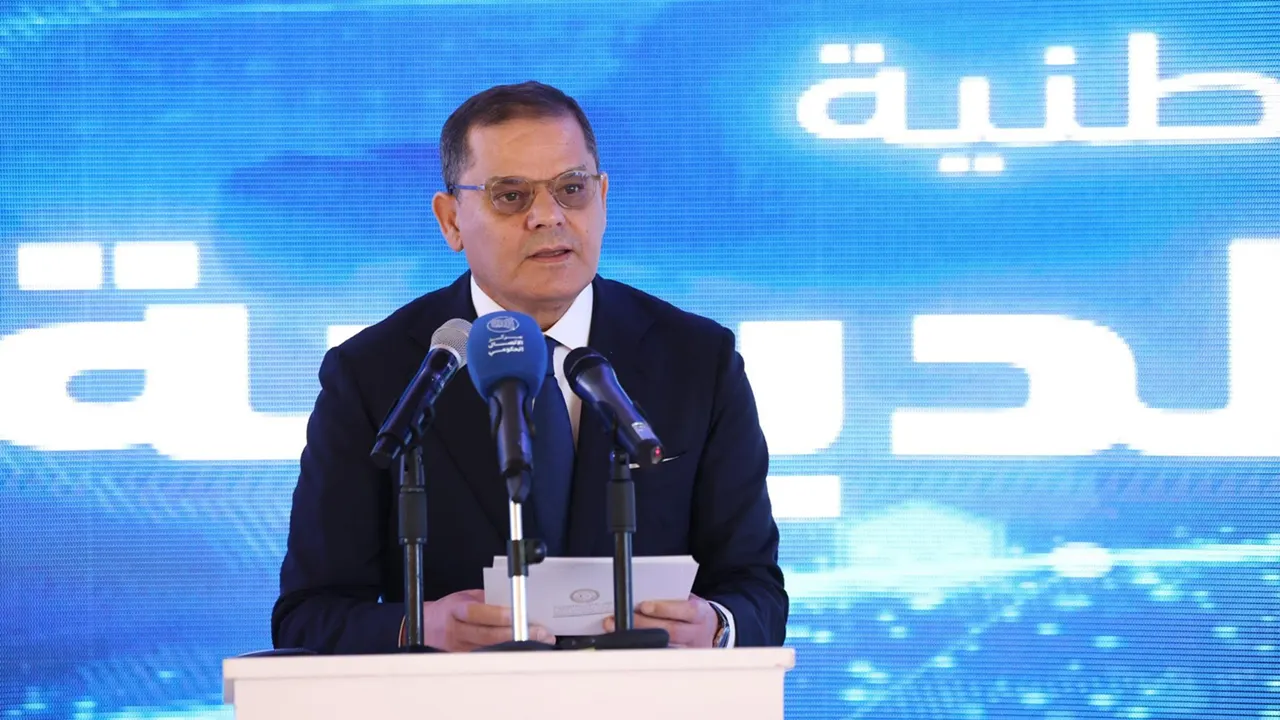
The Libyan Government of National Unity, under Prime Minister Abdulhamid Dbaiba, has officially launched its National Artificial Intelligence Strategy 2026–2030, a comprehensive plan to modernize public services and foster a domestic tech ecosystem. Announced at a ceremony in Tripoli, the strategy is paired with an AI Ethics Charter and outlines an ambitious agenda to integrate AI across government and support the next generation of tech founders.
Quick Facts
- Plans to support 100 AI startups
- Training 10,000 employees in advanced tech
- Automating 50% of government transactions by 2030
- Digitizing 70% of government paper records
A Six-Pillar Plan for Digital Transformation
Libya’s strategy is structured around six core pillars: governance and leadership; legislation and ethics; infrastructure and data; human capital and education; innovation and priority sectors; and monitoring and evaluation. The framework provides a detailed roadmap for building a national AI capability from the ground up.
The government is prioritizing early AI deployment in health, financial services, education, and public services. Specific initiatives mentioned include using AI for early disease diagnosis, creating personalized learning platforms for students, and developing models to detect financial fraud and money laundering.
Building the Foundations: Infrastructure and Governance
A significant part of the strategy focuses on establishing the necessary digital infrastructure and regulatory bodies. Key projects include launching a Libya Sovereign Cloud (2026-2027), a Unified National Digital ID system by 2027, and a National Data Exchange Platform by 2028. A core principle is data decoupling—separating data from legacy applications to ensure future flexibility.
On the governance front, the plan calls for creating a National Artificial Intelligence Authority under the Cabinet, appointing a Chief AI Officer, and establishing an Executive Office for AI Initiatives within the Ministry of Planning. A National Ethics Committee for AI is also slated for 2027.
Cultivating Talent and a Startup Ecosystem
Developing local talent is a central theme of the new strategy. The government intends to launch a National Academy for Artificial Intelligence by 2028 and integrate AI and digital ethics into school and university curricula by 2027.
To directly stimulate the startup scene, the plan includes establishing national AI incubators and commits to providing scholarships and specialized training. The headline goal is to provide direct support for 100 AI-focused startups by the end of the decade, a clear signal of intent to build a self-sustaining tech sector.
An Ethical Framework for AI Adoption
Alongside the strategy, the government adopted an AI Ethics Charter that emphasizes a human-centric approach. The charter explicitly states that AI systems should serve as tools to support human decision-making rather than replace it, a critical distinction for sensitive areas like justice, security, and healthcare. It commits the government to principles of justice, transparency, accountability, and the protection of digital sovereignty.
The government was also direct about the hurdles it faces, citing the current absence of a unified national AI body, legislative fragmentation, limited high-quality data, and a shortage of specialized skills as the primary weaknesses the new strategy aims to fix.
About the National AI Strategy 2026–2030
The National Artificial Intelligence Strategy 2026–2030 is Libya’s first comprehensive national framework for AI-led digital transformation. Overseen by the Minister of State for Digital Economy and Artificial Intelligence, it sets out 35 initiatives to modernize government services, build digital infrastructure, develop human capital, and support a domestic AI startup ecosystem.
Source: Africa AI News