
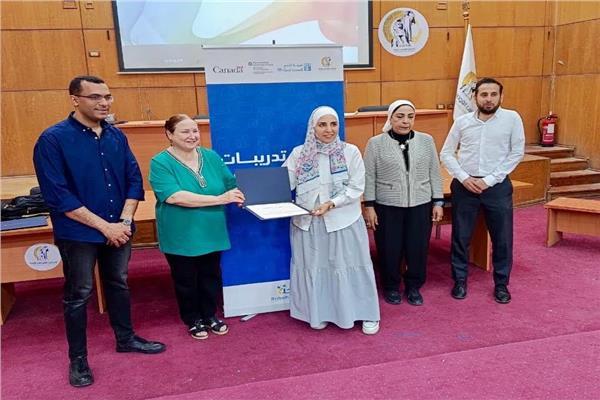
Egypt’s National Council for Women (NCW) has launched a series of entrepreneurship training sessions for women in the Giza governorate. The initiative is part of the “Rabha” program, an ambitious project designed to build the capabilities of female entrepreneurs and improve the success and sustainability of their businesses.
Quick Facts
- Entrepreneurship training for women in Giza.
- Aims to enhance business success and sustainability.
- Backed by UN agencies and Canadian government.
A Multi-Stakeholder Collaboration
The “Rabha” program is a significant collaborative effort, bringing together key local and international players. It is executed in cooperation with UN Women, the United Nations Industrial Development Organization (UNIDO), and the Onsi Sawiris Entrepreneurship and Innovation Center at The American University in Cairo’s School of Business.
The partnership also includes the NCW, the Ministry of Trade and Industry, and the Micro, Small and Medium Enterprises Development Agency (MSMEDA), with financial support from the Government of Canada.
From Financial Planning to Market Competitiveness
The program’s curriculum is structured to provide participants with specialized training across critical business areas. Modules cover core entrepreneurship principles, financial planning, marketing, and essential soft skills. The training aims to help founders develop their existing projects and improve their management efficiency.
Beyond the initial training, the “Rabha” program provides participants with technical support by connecting them with support organizations and business incubators. This post-training linkage is designed to help founders leverage available opportunities to scale their ventures and strengthen their competitive position in the market.
About the Rabha Program
The “Rabha” program is a strategic initiative aimed at fostering a supportive ecosystem for female entrepreneurs in Egypt. By enhancing women’s economic participation, the program contributes to improving their quality of life and supports broader sustainable development goals within the country.
Source: Akhbar Elyom