


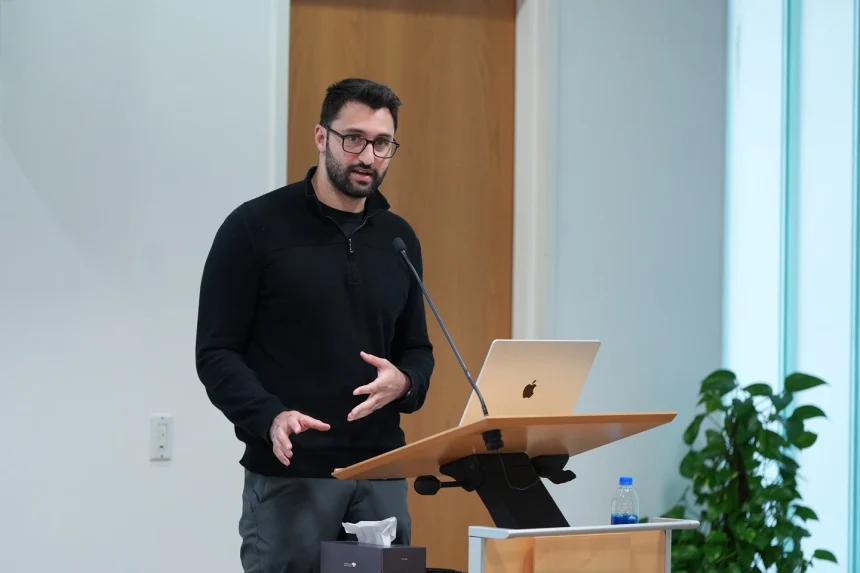
Qatar Science & Technology Park (QSTP), a member of Qatar Foundation, is redefining the regional healthcare landscape through its specialized QSTP × Merck Healthcare FemTech Accelerator. Led by Haider Khan, Accelerator Lead at QSTP, the initiative is shifting the focus of women’s health from a marginalized niche to a high-impact investment priority. By addressing a global R&D funding gap—where women’s health currently receives only 5% of total research investment despite representing a $430 billion market—the program positions Qatar as a strategic hub for scalable medical solutions.
Bridging The Gap Between Innovation And Implementation
A core philosophy of the QSTP × Merck partnership is moving beyond “visibility” toward real-world “deployment.” While many global programs prioritize exposure, this accelerator is structured to help startups navigate the “implementation gap”—the difficult transition from early-stage traction to clinical validation. By embedding startups directly into pilot environments and real-world testing settings in Qatar, the program allows founders to generate credible evidence and refine products based on actual healthcare use cases rather than theoretical assumptions.
Deep Tech As A Catalyst For Precision Health
The accelerator places a heavy emphasis on deep tech solutions, including AI-driven diagnostics, robotics, and materials science. This focus is critical because women’s health challenges are inherently data-intensive and have historically suffered from a lack of diverse datasets. Deep tech provides the tools to rebuild these foundations, offering earlier and more accurate biomarker-based detection and personalized interventions. This shift is expected to move the sector away from surface-level reproductive care toward addressing broader chronic illnesses, oncology, and cardiovascular conditions in women.
Measuring Success Through Clinical And Systemic Impact
Impact within the QSTP × Merck framework is measured across two primary dimensions: clinical outcomes and system-level performance. Success is tracked via execution-focused indicators such as active pilots launched, strategic partnerships formed, and the ability of startups to secure follow-on investor traction. This outcome-driven approach ensures that the 240 applications received from 64 nationalities—71% of which are women-led—are translated into tangible improvements in patient care pathways and healthcare efficiency across the WANA (West Asia and North Africa) region.
Regional Evolution Of The FemTech Sector
As the program matures, FemTech is expected to evolve from a specialized sub-sector into an integrated component of mainstream healthcare in the Middle East. By attracting global founders to Qatar and building local capacity for validation, QSTP is creating a credible ecosystem for women’s health innovation. This strategic alignment not only addresses a significant public health imperative but also taps into a global economic opportunity estimated to contribute up to $1 trillion to global GDP annually by 2040.
About Qatar Science & Technology Park
Qatar Science & Technology Park (QSTP) is a premier hub for technology-based entrepreneurship and an integral part of the Qatar Foundation research, development, and innovation ecosystem. Located within Education City, QSTP provides a Free Zone and a world-class incubator for tech startups and multinational corporations. Its mission is to transform Qatar into a regional leader in scientific and psychological innovation by fostering a culture of R&D, providing access to funding, and creating pathways for the commercialization of homegrown technologies.
Source: QSTP