




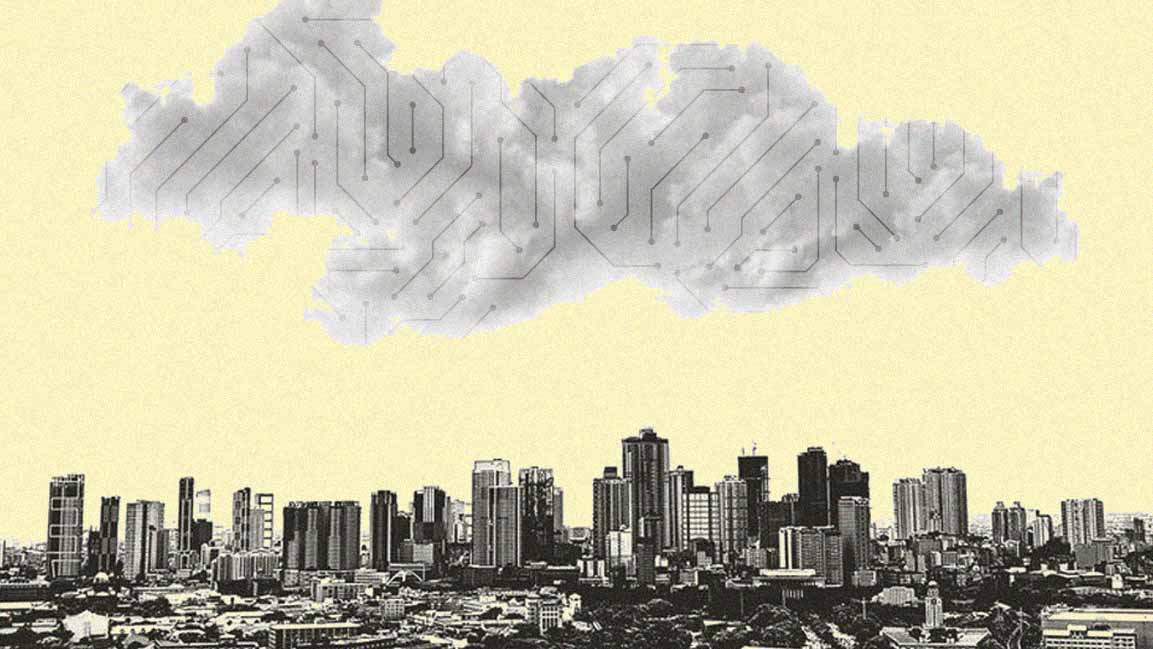
The UAE is combining artificial intelligence, nanomaterials and atmospheric modelling to improve the effectiveness of its cloud-seeding program as it works to strengthen water security.
The country introduced cloud seeding several decades ago to increase rainfall and supplement limited freshwater resources. The UAE Research Program for Rain Enhancement Science (UAEREP), launched in 2015, supports research into newer rain-enhancement technologies.
In a video shared this week, UAEREP explained how the dispersion of seeding agents affects cloud-seeding results. The process involves distributing tiny particles through suitable clouds so they can interact with cloud droplets and ice crystals, helping create conditions for rainfall.
According to UAEREP, predicting how particles move inside clouds is critical for determining where and when seeding materials should be released. Atmospheric modelling and real-time analysis are therefore becoming central to the process.
The UAE has traditionally used hygroscopic flares that release salt-based particles. Researchers have also developed nanoscale materials with a larger surface area and faster dispersion. UAEREP said the nanoparticle powder can be up to three times more effective than conventional flares and disperses almost instantly instead of taking several minutes to combust.
AI systems are being developed to assess cloud conditions in real time and identify the best moment for seeding. The National Center of Meteorology is also testing electric charging to stimulate precipitation and developing numerical models for future missions.
Source: Fast Company Middle East






-p-2000.png "SEQUENCIVE and KAUST Launch namya to Advance Sustainable Agriculture in Saudi Arabia")