
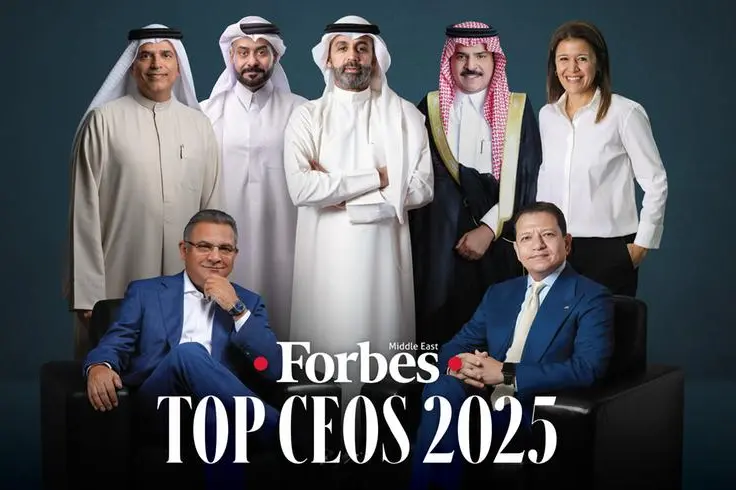
Forbes Middle East has released its fifth annual “Top 100 CEOs in the Middle East” list, offering a definitive look at the influential leaders shaping the region’s corporate landscape. The 2025 ranking highlights executives who are not only driving business performance but are also acting as nation-builders, steering key industries toward innovation, economic diversification, and global prominence.
The ranking was curated based on the CEO’s impact on the region and the markets they serve, their experience, company size and financial performance, and key achievements and initiatives implemented over the past year.
The Unchanged Top Tier
Demonstrating stability at the helm of the region’s largest corporations, the top three positions on the list remain unchanged from the previous year. Amin H. Nasser, President and CEO of Saudi Aramco, secured the top spot, followed by Sultan Al Jaber, Group CEO and Managing Director of ADNOC Group. Sheikh Ahmed bin Saeed Al Maktoum, Chairman and Chief Executive of Emirates Airline & Group, ranked third.
Completing the top five are Syed Basar Shueb, CEO and Managing Director of the UAE’s International Holding Company (IHC), and Saad Sherida Al-Kaabi, Deputy Chairman, President & CEO of QatarEnergy.
A Look at the Demographics
The 2025 list features leaders from 18 different nationalities, with Emirati executives leading the ranking with 32 entries. They are followed by 18 CEOs from Saudi Arabia and 16 from Egypt, with these three nationalities comprising 65% of the entire list.
From a sector perspective, banking and financial services continues its dominance with 24 leaders featured. The diversified and energy sectors followed with nine entries each, showcasing the varied industrial powerhouses across the Middle East.
Key Trends Shaping Leadership
A prominent theme in this year’s list is the strategic pivot towards diversification away from oil-dependent economies. There is also a significant emphasis on integrating artificial intelligence and advancing sustainability agendas in response to the global climate crisis.
Notable initiatives highlighted include QatarEnergy’s agreement with Samsung C&T to build the Dukhan solar power plant. In Saudi Arabia, ACWA Power signed agreements worth $8.3 billion with the Saudi Power Procurement Company and Badeel to develop seven major renewable energy plants, underscoring the region’s commitment to a greener future.
About Forbes Middle East
Forbes Middle East is a licensed edition of Forbes for the Arab world, championing inspiring business journalism and entrepreneurial capitalism. Its online and social platforms break news covering billionaires, business, investment, technology, economy, entrepreneurship, leadership, and luxury lifestyles. The monthly magazine, featuring in-depth interviews with the Middle East’s most influential and innovative leaders, is published in print in English and Arabic, with digital versions available to both regional and global audiences online. Forbes Middle East extends the Forbes brand of journalism across the Arab world, conducting its own comprehensive research to publish original lists that adhere to strict methodologies.
Source: Zawya