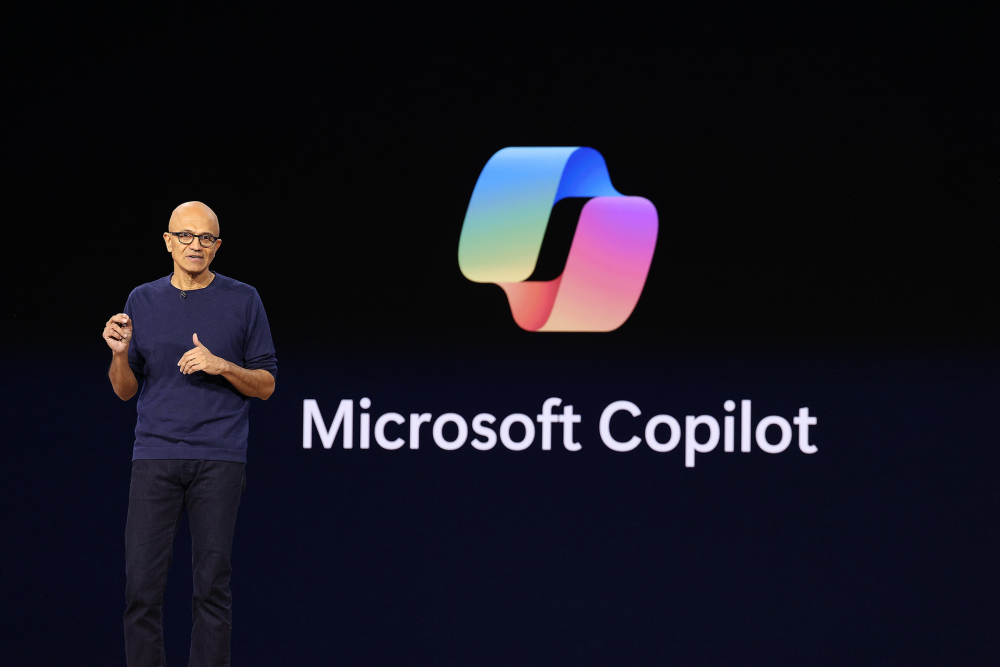




The Abu Dhabi Government, through its Department of Government Enablement (DGE), is rolling out Microsoft 356 Copilot to 35,000 public sector employees, marking one of the largest generative AI deployments in the global public sector. The move is a core part of the emirate’s ambitious strategy to become the world’s first “AI-native” government by 2027.
Quick Facts
- 35,000 government employees get Microsoft AI Copilot.
- All AI processing kept within UAE borders.
- Part of a plan for AI-native government by 2027.
A Government-Wide AI Transformation
Under the “Frontier Employee Programme,” Abu Dhabi is deploying 26,000 new Microsoft 365 Copilot licenses, adding to 9,000 already in use across 27 government entities. This initiative standardizes the generative AI tool as the primary productivity platform for the government, embedding its capabilities into daily operations from administrative tasks to public service delivery.
The large-scale adoption is expected to accelerate decision-making and create more responsive services for Abu Dhabi’s citizens and residents.
His Excellency Wesam Lootah, Director General of GovDigital at DGE, stated, “Abu Dhabi is building a government that is AI-native by design, where technology elevates how government entities operate, collaborate, and serve the community. The rollout of Microsoft 365 Copilot across government marks a significant step in equipping our workforce with advanced AI capabilities, whilst ensuring adoption is governed, secure, and built to last.”
Building a Sovereign AI Foundation
A critical component of the rollout is data sovereignty. All 35,000 licenses are provisioned with Advanced Data Residency (ADR), ensuring that all AI-related data processing occurs within the UAE’s borders. This sovereign AI model is central to the government’s compliance and data protection standards.
The deployment is supported by a comprehensive AI Adoption and Enablement framework that includes structured training, change management, and certification programs to ensure employees can use the tools effectively and securely.
“The UAE’s national direction toward Agentic AI reflects a distinctive approach to government transformation, one built on a clear vision and decisive leadership,” said Amr Kamel, General Manager at Microsoft UAE. “At Microsoft, our role is to provide the secure, sovereign foundations that enable transformation of this kind, and we are proud to support DGE’s leadership in bringing it to life.”
This initiative builds on a March 2025 agreement between DGE, Microsoft, and Core42 to implement a sovereign cloud environment capable of handling over 11 million daily digital interactions.
From Adoption to an AI Factory
Beyond just tool deployment, Abu Dhabi is establishing an “AI Factory” to develop and scale hundreds of AI use cases and over 1,000 AI agents across the public sector. These agents will automate workflows ranging from document processing and handling public queries to policy analysis.
The government’s popular services app, TAMM, which offers over 1,150 services, already utilizes Microsoft technologies like Dynamics 365 and Azure. The partnership also extends to cybersecurity, with DGE’s Government Security Operations Centre (GSOC) built on Microsoft Sentinel and Defender XDR, supporting approximately 60,000 users.
About DGE
The Department of Government Enablement – Abu Dhabi (DGE) was established in 2023 to enable Abu Dhabi government entities and shape the future of government. DGE provides next-generation government services and formulates policies to create a streamlined, resilient, and technology-empowered government. It brings together multiple entities, including the Abu Dhabi Digital Authority, Human Resources Authority, and TAMM, to lead the digital transformation for the Abu Dhabi Government.
Source: Zawya